Quick Comparison: APEC ROES-50 vs iSpring RCC7
| Spec | APEC ROES-50 | iSpring RCC7 |
|---|---|---|
| Stages | 5 | 5 |
| Production rate | 50 GPD | 75 GPD |
| Certifications | NSF 58 & 372 | NSF 58 |
| Faucet mount | Standard under-sink nut | Patented top-mounted (single nut from above) |
| Tubing | Color-coded, JG quick-connect | Color-coded, JG-style quick-connect |
| Tank capacity | ~3.2 gal usable (4 gal nominal) | ~3.2 gal usable (4 gal nominal) |
| Pure-to-drain ratio | ~1:3 | ~1:3 |
| Year-1 filter cost | ~$50 | ~$45 |
| Warranty | 2-year limited (with registration) | 1-year + lifetime tech support |
| Best for | Certifications, low pressure tolerance | Solo installer, faster refill |
If you are weighing APEC ROES-50 vs iSpring RCC7 first-time DIY install with zero plumbing experience, the short answer is this: the iSpring RCC7 is the friendlier first-build because of its patented top-mounted faucet (you tighten one nut from above the sink instead of wrestling underneath) and color-coded, pre-flared tubing. The APEC ROES-50 is the safer long-haul investment thanks to USA-built filter housings, conservative 50 GPD output, and an unusually clean NSF 58 and 372 certification package. Both ship as complete, leak-tested kits that a careful weekend homeowner can install in three to five hours with a cordless drill, an adjustable wrench, and patience.
Below is the side-by-side breakdown, followed by who should buy which one, plus two backup picks for the homeowners who realize halfway through unboxing that they would rather not drill a hole in their granite countertop after all.
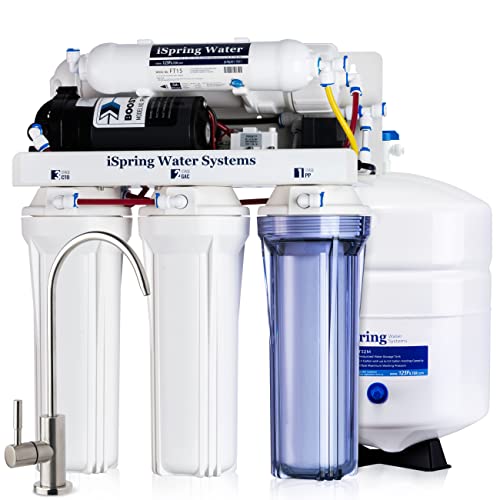
- Reverse Osmosis produces purified drinking water by pressurizing water molecules through RO membrane and leaving impurities out. The under sink water filter RCC7P’s extremely
- TDS Reduction: 5-Stage gradient water filtration produces great-tasting purified water every time you turn on the faucet right at your kitchen counter – even better than most
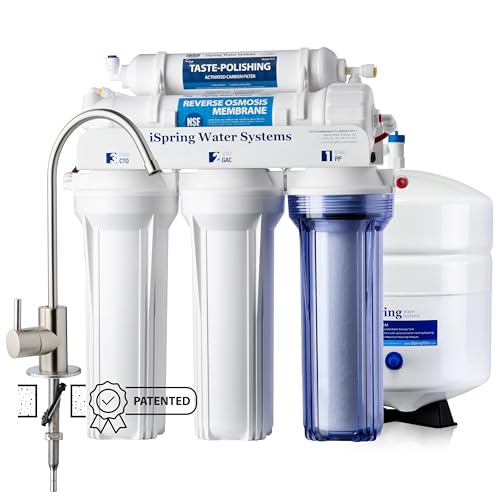
- EFFECTIVELY REDUCES CONTAMINANTS - The iSpring RO system delivers clean, pure, and great-tasting drinking water by removing up to 99% of over 1,000 harmful contaminants, including
- CERTIFIED TO NSF/ANSI 58 - Produced to strict American quality standards, this iSpring reverse osmosis system is NSF/ANSI 58 certified. For over 15 years, it has provided American
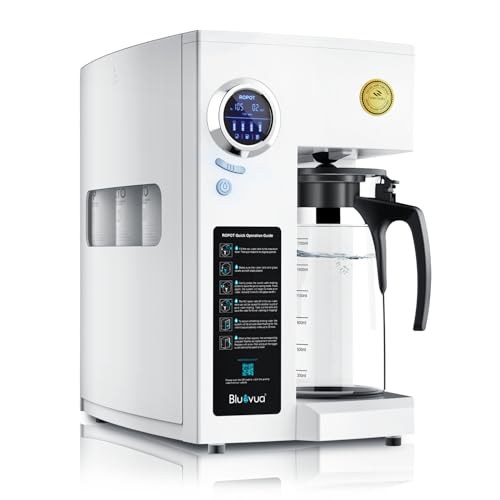
- COUNTERTOP FILTRATION + PREMIUM-QUALITY CARAFE: No plumbing or installation is required for this RO system. Simply plug this portable piece of tech into any power source, and
- POWER SAVING + WATER SAVING: The water system automatically enters a power-saving standby mode when not in use to reduce power consumption. Filters are also designed to help save
The DIY Reality Check Before You Buy Either
Before you click buy on the APEC ROES-50 vs iSpring RCC7 first-time DIY debate, walk under your sink with a flashlight and confirm three things. First, you have a cold-water supply line with a shutoff valve you can actually reach and turn. Second, you have a flexible drain pipe section where a saddle valve can clamp (the horizontal arm of the P-trap, on the side opposite the disposal). Third, you have either an unused sparkler hole on the sink deck, a soap-dispenser hole you can repurpose, or you are willing to drill a 1/2-inch hole through stainless steel (easy) or granite (hire a stone shop).
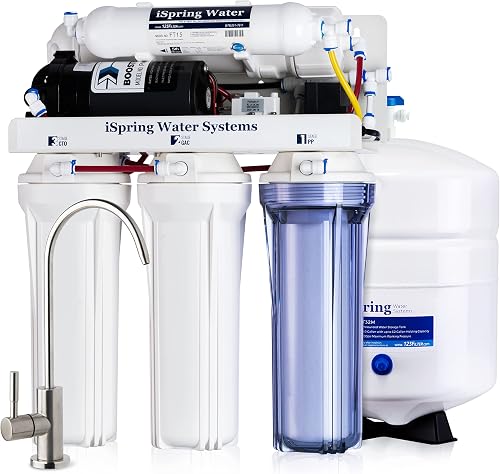
If any of those three is a hard no, skip both of these systems and look at a countertop unit instead. We will cover that escape hatch lower in the article. Otherwise, keep reading.
APEC ROES-50: The Conservative, Certified Pick
The APEC Water ROES-50 5-Stage Under Sink Reverse Osmosis System has been the default recommendation in plumbing forums for over a decade for one simple reason: it works for years and the company answers the phone when you call. The five stages are sediment, two carbon blocks, a 50 GPD TFC membrane, and a final coconut-shell polishing carbon. Housings are made in the USA, the fittings are John Guest quick-connects, and the membrane is conservatively rated which means it produces clean water at a wider range of household pressures (40-85 psi) without a booster pump.
For first-time installers, the ROES-50 trade-off is the faucet. You mount it with a traditional under-sink lock nut, which on a deep cabinet means lying on your back, working blind above your head, with one wrench and a flashlight in your teeth. It is doable. It is not joyful. Budget an extra 45 minutes for that step alone. Everything else (the pre-assembled stage 1-3 manifold, the membrane housing, the tank, and the drain saddle) takes about two hours.
If you want a deeper teardown of strengths and weak points, our full APEC Water Systems ROES-50 review walks through 18 months of use.
iSpring RCC7: The First-Timer's Best Friend
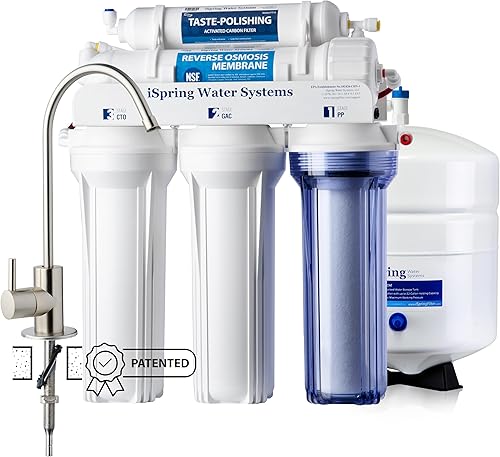
The iSpring RCC7, NSF Certified, High Capacity Under Sink 5-Stage Reverse wins the install-ease comparison on the strength of one feature: the top-mounted faucet. Instead of fishing a lock nut underneath the sink, you drop the faucet stem through the deck hole, slip a chrome washer over the top, and tighten a single decorative nut from above using a screwdriver. It is the difference between assembling IKEA furniture with the manual versus without. For a first-timer working solo, that single design choice can shave an hour off the build and a lot of language out of the air.
The system itself is a 75 GPD, 5-stage configuration (sediment, GAC carbon, CTO carbon block, TFC membrane, post-carbon polishing). Production is faster than the ROES-50, so the tank refills quicker after you draw a glass. The trade-off is that iSpring's 75 GPD membrane is more sensitive to low feed pressure; if your home pressure runs under 50 psi, you may want to step up to the iSpring RCC7P which adds a booster pump. For city water at typical 55-70 psi, the standard RCC7 is fine. We cover what to do when your TDS reading lies to you in our full iSpring RCC7 review.
Installation, Step by Step: Where First-Timers Get Stuck
Both systems ship with a printed manual, a QR code to a YouTube walkthrough, and pre-assembled brackets. The order of operations is roughly identical:
- Shut off the cold water under the sink and open the kitchen tap to drain pressure.
- Mount the manifold to the cabinet sidewall using the included screws (drill pilot holes first).
- Drill or repurpose a faucet hole in the sink deck and install the dispenser.
- Clamp the drain saddle to a horizontal section of the P-trap (avoid the disposal side).
- Tee into the cold water supply with the included needle valve.
- Set the tank, connect the color-coded tubing, open all valves, and check for drips.
- Flush the system for the first 1-2 tanks (about 4-8 hours) and discard that water.
The two places first-timers consistently get stuck are the drain saddle (clamp too loose = leak, too tight = cracked pipe) and the faucet install (already covered above). The iSpring's top-mounted design erases half the second problem. Neither system fixes the drain saddle problem, but both ship a sharper-than-average self-piercing needle that makes it easier.
For a more detailed walkthrough, see our RO installation guide, which is system-agnostic and covers the parts that the box manuals gloss over.
Express Water RO5DX: The Budget Alternative
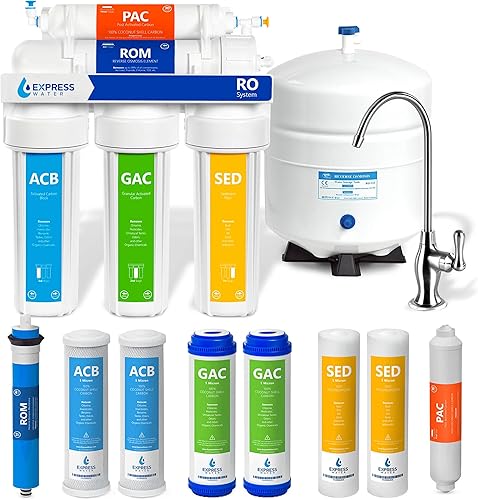
If both target systems are stretching your budget, the Express Water RO5DX 5-Stage Under Sink Reverse Osmosis Water Filter is the obvious budget play. Same 50 GPD output as the APEC, same 5-stage layout, same NSF 58 and 372 certifications, and a chrome faucet that looks more upscale than its price. The hidden cost is that filter replacement cartridges run slightly more per year and the customer-service phone tree is less responsive than APEC's. For a renter or a homeowner who wants to try RO before committing, it is a credible entry point.
Bluevua RO100ROPOT: The Zero-Install Escape Hatch
Read this paragraph carefully if you reached the DIY reality check above and one of the three conditions failed. The Bluevua RO100ROPOT Countertop Reverse Osmosis Water Filter System requires no plumbing whatsoever: you pour tap water into the top reservoir, plug it into a regular 110V outlet, and the system produces filtered RO water in a holding tank you draw from with a button. It is WQA certified, includes remineralization, and the filters last 6-12 months depending on your input water. The trade-offs are that it sits on your counter (about as much space as a coffee maker), it is louder than an under-sink unit, and the pure-to-drain ratio is worse. For renters, college kids, and anyone who has looked under their sink and decided life is too short, it is the right answer.
Which One Should the First-Time DIY Homeowner Actually Buy?
Here is the honest verdict on the APEC ROES-50 vs iSpring RCC7 first-time DIY decision:
- Buy the iSpring RCC7 if you are installing solo, your sink deck is stainless steel or already has a usable hole, your city water pressure is 50 psi or higher, and you want the system producing usable volumes within an hour of finishing the install.
- Buy the APEC ROES-50 if you have a helper for the faucet step, you live in an area with variable or low water pressure, you care about the additional NSF 372 (lead-free materials) certification, and you want the slightly longer track record of trouble-free service.
- Buy the Express Water RO5DX if price is the deciding factor and you accept a slightly higher cartridge cost long-term.
- Buy the Bluevua countertop if any condition in the DIY reality check failed.
Whichever you pick, do not overlook the maintenance side. Pre-filters need swapping at 6-12 months and the membrane every 2-3 years. Skipping that schedule is the single most common reason RO systems turn into expensive paperweights, and is the top item in our RO buying mistakes guide.
Frequently Asked Questions
Can I really install the APEC ROES-50 or iSpring RCC7 with no plumbing experience?
Yes, with caveats. Both systems are designed around push-fit John Guest quick-connect fittings that eliminate the need to flare, solder, or thread copper. The hardest moments for a true first-timer are drilling the faucet hole (if you do not have an existing one) and getting the drain saddle clamp tension right. Plan for 3-5 hours, watch the manufacturer's YouTube install video twice before starting, and have a bucket and old towels ready.
Does the iSpring RCC7 top-mounted faucet really make that big a difference for a solo installer?
For a solo first-timer, yes. The conventional under-sink lock nut on the APEC requires you to work overhead, blind, inside a cabinet. The iSpring's top-mounted nut tightens from above with the faucet held in your other hand. If you have a partner who can hold the faucet while you work the nut from below, the difference shrinks significantly.
Will either system fit under a standard kitchen sink with a garbage disposal?
Both systems are designed to fit, but cabinets with a deep garbage disposal can be tight. Measure your usable wall space: you need roughly 16 inches wide by 6 inches deep for the manifold, plus 11 inches by 11 inches of floor space for the tank. If you are short on space, the tank can lay on its side, and the manifold can mount on the cabinet wall opposite the disposal.
What is the difference between the iSpring RCC7 and the RCC7AK alkaline version?
The RCC7 is the 5-stage base model. The RCC7AK adds a sixth stage: an alkaline remineralization cartridge that adds back calcium, magnesium, sodium, and potassium for taste and a higher pH. If you find RO water tastes flat, the AK upgrade is worth it. For first-time DIY installers, the RCC7 base is simpler and cheaper to maintain.
How much water do these RO systems waste per gallon of drinking water produced?
Both the APEC ROES-50 and iSpring RCC7 run at roughly a 1:3 pure-to-drain ratio, meaning about three gallons go down the drain for every one gallon of RO water produced. This is normal for tank-based RO systems. Tankless models like the Waterdrop G3 run closer to 1:1 or 2:1 but cost significantly more and require an electrical outlet under the sink.
How often do I need to change the filters on a 5-stage RO system?
For both systems: stages 1-3 (sediment and carbon pre-filters) every 6-12 months depending on input water quality, the membrane every 2-3 years, and the post-carbon polishing filter annually. Set a calendar reminder when you install, because there is no built-in indicator on these basic 5-stage units. A cheap TDS meter is the easiest way to confirm the membrane is still doing its job.
Is RO water safe to drink long-term without remineralization?
Yes, for adults eating a normal diet. The minerals removed by RO are present in food at far higher concentrations than in tap water. If you prefer the taste of mineralized water, or you are filling an aquarium or espresso machine that calls for specific TDS levels, choose a 6-stage system with remineralization (such as the iSpring RCC7AK or the APEC ROES-PH75) instead of the base RCC7 or ROES-50.
Key Takeaways
- Choosing the right APEC ROES-50 vs iSpring RCC7 first-time DIY means matching the key features to your specific needs and budget
- Read real customer reviews and check the return policy before you commit
- Also covers: beginner-friendly RO system comparison
- Also covers: APEC vs iSpring novice install
- Also covers: easiest under-sink RO new homeowner
- Compare value across models — the priciest option is not always the best fit