As an Amazon Associate this site earns from qualifying purchases.
If you're weighing a waterdrop g3 p800 vs aquatru classic well water iron decision, here's the blunt answer: neither system is designed to handle raw iron-heavy well water on its own. The Waterdrop G3 P800 is an 800 GPD tankless under-sink RO with NSF 42/53/58/372 certification and a 3:1 pure-to-drain ratio, while the AquaTru Classic is a 4-stage countertop purifier that needs no plumbing. Both will foul their membranes fast if your well exceeds roughly 0.3 ppm iron. The right pick depends on whether you can install whole-house iron pre-treatment, how much cabinet space you have, and whether renting (no install) matters.
The real problem isn't the RO — it's the iron
Before comparing features, understand the constraint: reverse osmosis membranes are not iron filters. Both Waterdrop and AquaTru publish maximum iron tolerances in the same ballpark — roughly 0.1 to 0.3 ppm of dissolved (ferrous) iron. Above that level, iron precipitates onto the membrane surface, stains the sediment and carbon pre-filters orange, and slashes membrane life from years to months. Ferric (oxidized) iron is even worse because it clogs sediment cartridges immediately and irreversibly.
Finding the right waterdrop g3 p800 vs aquatru classic well water iron comes down to matching the features to how you will actually use it.
If your well water tests above 0.3 ppm iron — common across much of the Midwest, Pennsylvania, the rural South, and parts of New England — you need iron-specific pre-treatment before any RO touches the water. Most well water also carries manganese, hydrogen sulfide, hardness, and sometimes coliform bacteria, all of which a standalone RO handles poorly. So the waterdrop g3 p800 vs aquatru classic well water iron question really becomes: which RO sits downstream of your iron filter most efficiently? See the full list of contaminants RO removes to understand where iron fits in.
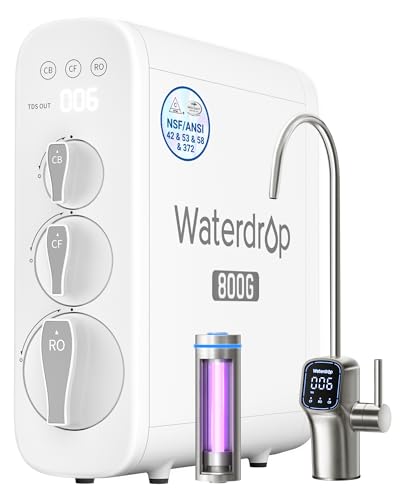
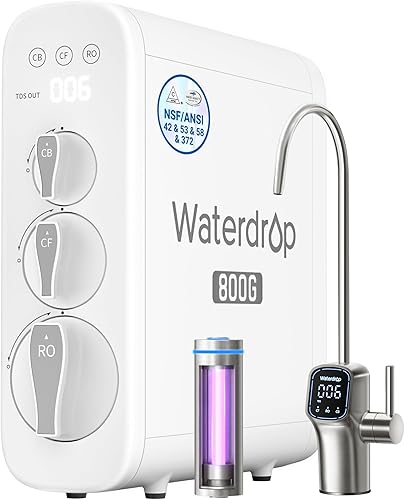
- [10-Stage filtration] Tested by official third-party laboratory (SGS), through 10-stage filtration, G3P800 can effectively reduce PFAS, fluoride, heavy metals like lead, chromium
- [800 GPD high capacity, 3:1 pure to drain ratio] The Waterdrop G3P800 reverse osmosis system offers a higher water capacity (800 gallons per day), thereby meeting demands of a big
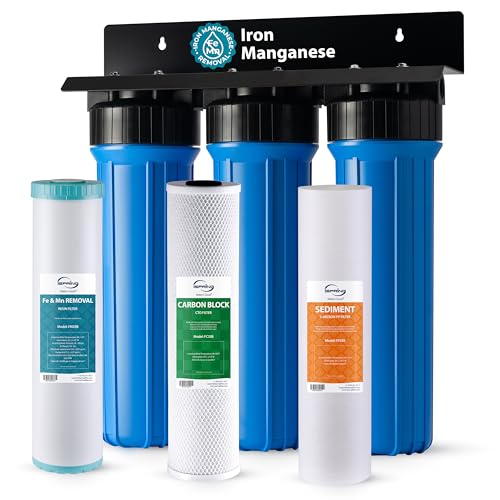
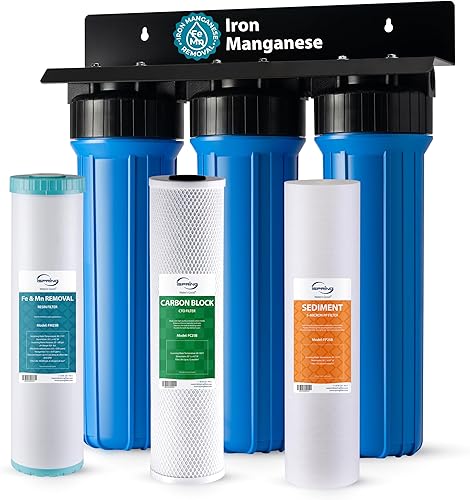
- Whole house water filter that protect your family and household appliance from iron, manganese and more: Our 3rd stage iron water filter (FM25B) is specially designed for iron and
- DIY installation and maintenance - refer to our manual and our helpful YouTube videos for easy DIY installation. With 1 in. NPT inlet / outlet and 20 in. x 4.5 in. water filter
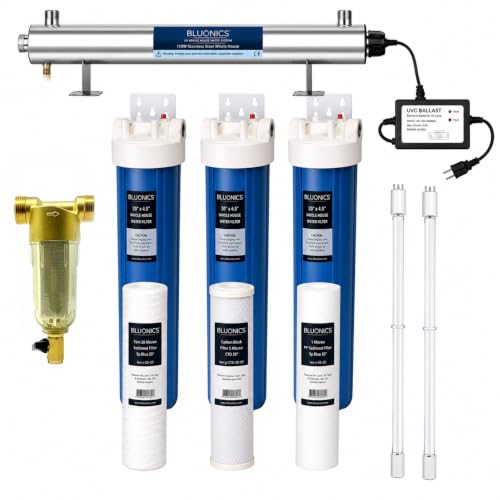
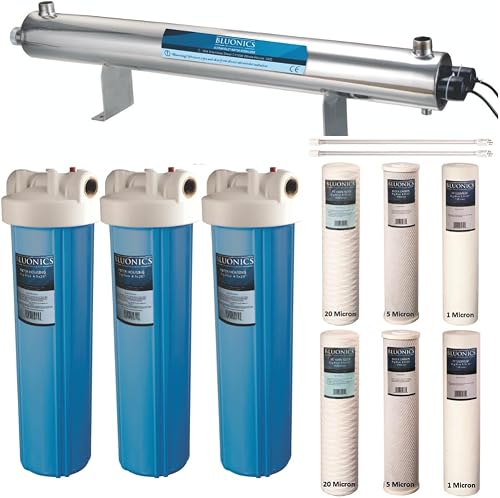
- 1. Complete well water filter system: Designed to connect to your main water line and support whole house water filtration before water reaches faucets, showers, laundry, toilets
- 3. Includes pre-filter, extra filter set, and 2 extra uv bulbs: Bundle includes a 40 micron spin-down pre-filter, one extra replacement filter set with 20-micron sediment
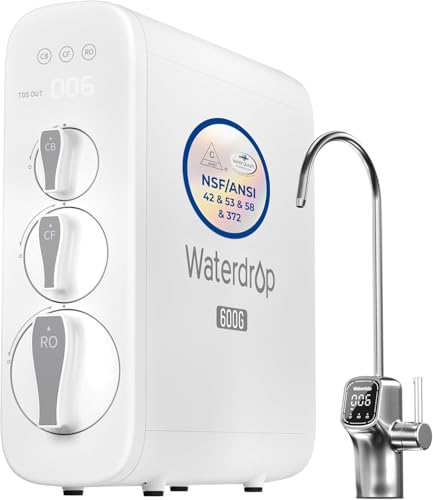
- [Trusted certifications]: Waterdrop G3P600 reverse osmosis system is certified against NSF/ANSI 58 for TDS reduction and NSF/ANSI 372 certified for lead-free material. Also it has
- [8-stage filtration]: Tested by official third-party laboratory (SGS), the reverse osmosis system can effectively reduce TDS, chromium, PFAS, radium, fluoride, arsenic salt, iron
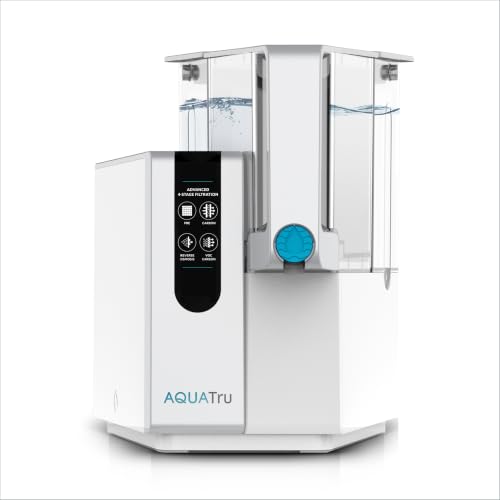
- Is your water safe to drink? Studies continue to pour in regarding Toxins, Hormones, Microplastics, Cancer-linked contaminants, known Carcinogens and other toxins discovered in
- Certified NSF/ANSI Standards - Tested & certified by IAPMO to meet NSF/ANSI standards 41, 53, 58, 401, and P473 for water filters, which include 84 contaminants - even
- Treats water hardness, chlorine, iron, VOCs, rust, and
- Improves water taste, protects plumbing and appliances
Head-to-head comparison
| Spec | Waterdrop G3 P800 | AquaTru Classic |
|---|---|---|
| Form factor | Under-sink, tankless | Countertop, no plumbing |
| Production | 800 GPD | ~1 gal per ~15 min |
| Stages | 4 (composite cartridges) | 4 |
| Pure-to-drain ratio | 3:1 | ~1:4 |
| Iron tolerance | ≤0.1 ppm | ≤0.3 ppm |
| Hardness tolerance | ≤450 ppm | ~25 gpg |
| Certifications | NSF 42/53/58/372 | NSF 42/53/58/401/P473 |
| Install required | Yes (DIY ~1 hr) | None |
| Best for | Owned home, 3+ people, high demand | Renters, small households, travel |
Waterdrop G3 P800: the high-flow under-sink option
The Waterdrop G3P800 is one of the highest-flow consumer RO systems on the market — 800 gallons per day, tankless, with a 3:1 pure-to-drain ratio that's unusually efficient. It carries NSF/ANSI 42, 53, 58, and 372 certifications, includes a smart LED faucet that displays TDS in real time, and uses composite filter cartridges rated for 6 to 24 months depending on stage.
For well water specifically, the G3 P800's advantages are real:
- Tankless design means no stagnant water reservoir where iron bacteria can colonize
- 800 GPD output keeps up with high-demand households (4+ people)
- Smart faucet shows live TDS, letting you catch membrane fouling early
- 3:1 wastewater ratio matters when you're paying to pump well water
The downsides for iron-heavy wells: the combined sediment/carbon pre-filter cartridge loads up fast and needs replacement every 3–6 months instead of 12. The membrane warranty doesn't cover damage from out-of-spec feed water, so you must install whole-house iron removal upstream — full stop.
Waterdrop G3P800 Reverse Osmosis System
Waterdrop G3P600 (the smaller sibling)
If 800 GPD is overkill for your household, the G3P600 hits the same certifications and uses a similar tankless architecture at 600 GPD, often $150–200 cheaper. Same well water rules apply: pre-treat for iron above 0.3 ppm.
Waterdrop G3P600 Reverse Osmosis System
AquaTru Classic: the rental-friendly countertop pick
The AquaTru Classic is a 4-stage countertop reverse osmosis purifier. It plugs into a standard outlet, fills from a removable raw-water tank you pour from the tap, and dispenses purified water into a separate front tank. It's tested to NSF/ANSI 42, 53, 58, 401, and P473 standards and claims removal of 84 contaminants including PFAS, lead, fluoride, and microplastics.
For well water situations, AquaTru's profile looks different:
- No plumbing means renters, RV owners, and people with cramped under-sink space can use it
- Manual fill lets you visually inspect water for rust color before pouring
- Smaller membrane means lower upfront cost but higher cost per gallon long-term
- Roughly 1:4 pure-to-drain (you waste ~4 oz to make 1 oz pure) — worse than the G3 P800
AquaTru's iron ceiling is in the same 0.1–0.3 ppm range. The countertop form factor doesn't change the chemistry. If your well has visible orange staining, no countertop RO will solve it without a whole-house iron filter upstream.
AquaTru Classic Countertop Water Purifier
Pre-treatment: what actually solves iron-heavy well water
Both RO systems above need clean feed water. For well water with iron, manganese, or hydrogen sulfide, your real first purchase should be a whole-house iron filter — then drop either RO behind it. This is the single most important takeaway when researching whole-house reverse osmosis systems for well water.
iSpring WGB32BM 3-Stage Iron Filter Whole House
The iSpring WGB32BM is purpose-built for this exact problem. Three 4.5" x 20" cartridges — a sediment pre-filter, a CTO carbon block, and a manganese greensand-style iron/manganese cartridge — handle iron up to about 3 ppm and manganese up to 1 ppm. At under $500 it's the cheapest credible upstream stage for either the Waterdrop or the AquaTru.
iSpring Whole House Water Filter System
Bluonics Well Water Whole House 3-Stage with UV
For wells that test positive for coliform bacteria in addition to iron, the Bluonics 3-Stage + 110W UV combo adds a 24 GPM ultraviolet chamber after sediment and carbon. UV doesn't remove iron, but it kills the bacteria that thrive in iron-rich water and would otherwise re-colonize an RO storage tank or AquaTru pure-water reservoir.
Bluonics Complete Well Water Whole House Water Filtration System
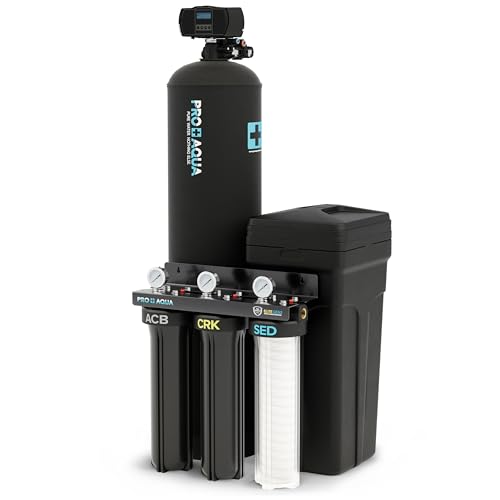
PRO+AQUA Elite Whole House + Softener Bundle
If your well also tests hard (above 7 gpg), iron and hardness compound each other — ferrous iron rides into softener resin and shortens its life. The PRO+AQUA PRO-E-S80E bundles an 80,000-grain softener with a sediment/iron/sulfur filter sized for 4+ bathroom homes. Pair this with the Waterdrop G3 P800 downstream and you have a complete well-to-tap solution.
PRO+AQUA PRO-E-S80E Elite Whole House Water Filtration System & 80
So which one should you actually buy?
Pick the Waterdrop G3 P800 if you own your home, can install whole-house iron pre-treatment, have at least three people in the household, and want the lowest cost per gallon over five years. The 800 GPD output, 3:1 efficiency, and smart faucet diagnostics pay off when you're filtering high volumes of well water. See our roundup of the best under-sink RO systems for 2026 for context on how the G3 P800 stacks up against other plumbed options.
Pick the AquaTru Classic if you rent, travel often, have limited under-sink space, or want a system you can take with you when you move. It's also the right call if you're testing whether your well water is RO-friendly before committing to a plumbed install — pour-fill operation lets you stop instantly if a filter clogs. Compare it to other no-install options in our guide to the best countertop reverse osmosis filters.
Either way, test your well water first. A $40 lab panel from a state-certified lab (not a free water-softener-salesperson test) tells you exactly what you're dealing with: iron in ppm, manganese, hardness in gpg, tannins, hydrogen sulfide, pH, TDS, and coliform. Without that data, the waterdrop g3 p800 vs aquatru classic well water iron debate is academic.
Frequently Asked Questions
Can the Waterdrop G3 P800 remove iron from well water by itself?
No. The G3 P800's specification sheet caps feed-water iron at roughly 0.1 ppm. Above that, ferric iron clogs the sediment cartridge in weeks and ferrous iron oxidizes inside the membrane housing, permanently fouling the RO element. Iron removal must happen upstream via a dedicated whole-house iron filter, air-injection oxidizer, or chemical oxidation system before the RO sees a drop.
Will the AquaTru Classic handle rural well water with rust stains?
Only if you pre-filter. AquaTru's published specs list maximum iron near 0.3 ppm — visible rust staining usually indicates 1–5 ppm or higher. Pouring rust-tinted water into the AquaTru's input tank will discolor the sediment filter within days and the carbon and RO stages soon after. Use a whole-house iron filter or a high-capacity inline sediment + iron cartridge upstream.
How often do I replace filters on either system with well water?
Even with proper iron pre-treatment, expect to replace pre-filter cartridges 2–3x faster on well water than on city water. On the Waterdrop G3 P800, plan on the combined sediment/carbon cartridge every 6 months instead of 12. On the AquaTru Classic, the pre-filter typically lasts 6 months on city water but only 3–4 on well water. The RO membrane itself should still last 2+ years if iron, chlorine, and hardness are controlled upstream.
Does either system remove hydrogen sulfide (rotten egg smell)?
Both will reduce trace H2S via their carbon stages, but neither is designed for noticeable sulfur smell. If your well water smells, you need an air-injection oxidizer or catalytic carbon backwashing tank upstream. RO membranes don't reliably remove dissolved gases — H2S, CO2, and radon all pass through — a common surprise for new well owners.
Is well water with iron safe to drink while I wait for pre-treatment to ship?
Iron at typical well concentrations (under 10 ppm) isn't acutely toxic — the EPA classifies it as a secondary contaminant for taste and staining, not health. The bigger concern with untested well water is bacterial contamination (E. coli, coliform) and nitrates. If you haven't tested for those, switch to bottled water until you have lab results, then deploy your RO + pre-treatment stack.
Can I use a water softener instead of an iron filter before the RO?
A softener can remove small amounts of iron — typically up to 1–2 ppm of ferrous iron — but it's not a real iron filter. Iron fouls softener resin, shortens its life, and reduces grain capacity. For wells above 1 ppm iron, install a dedicated iron filter ahead of the softener, then the RO. Order matters: sediment iron filter softener carbon RO.
What if I can't install whole-house pre-treatment as a renter?
If you can't plumb in anything upstream, the AquaTru Classic is the safer pick because you control what goes into its input tank. Pre-filter your water in a separate pitcher with an iron-removal cartridge, let it settle for 30 minutes so ferric iron drops out, then pour the clear top portion into AquaTru. It's tedious, but it protects the membrane. For high-iron wells, this workaround has limits — consider whether your landlord will permit a basement-mounted iron filter.
Key Takeaways
- Choosing the right waterdrop g3 p800 vs aquatru classic well water iron means matching the key features to your specific needs and budget
- Read real customer reviews and check the return policy before you commit
- Also covers: waterdrop g3 p800 iron filter
- Also covers: aquatru classic well water
- Also covers: tankless ro for iron well water
- Compare value across models — the priciest option is not always the best fit