As an Amazon Associate this site earns from qualifying purchases.
For serious cultivators, the best reverse osmosis system for bonsai trees is one that strips tap water down to near-zero TDS, removes chlorine and chloramine, and produces enough volume to keep an entire bench hydrated without you babysitting a slow tank. Bonsai roots are sensitive to dissolved salts, sodium, fluoride, and chlorine buildup in the soil. After testing the market in 2026, our top picks are the Waterdrop G3P800 for high-volume collections, the APEC ROES-50 as a reliable under-sink workhorse, and the Bluevua RO100ROPOT countertop unit for renters and small collections. Below is exactly how to choose, with picks, a comparison table, and watering tips.
Why Bonsai Trees Need Reverse Osmosis Water
Bonsai are kept in small, shallow pots with limited substrate volume. Every time you water with hard tap water, calcium carbonate, sodium, chlorine, chloramine, and fluoride accumulate in that tiny soil mass. Over months and years, this raises the substrate pH, burns delicate feeder roots, and shows up as crispy leaf tips on Japanese maples, chlorotic foliage on azaleas, and stunted growth on tropicals like ficus and Chinese elm. Species such as Satsuki azalea, Acer palmatum, Pinus parviflora (Japanese white pine), and Serissa are particularly intolerant of mineral-heavy water.
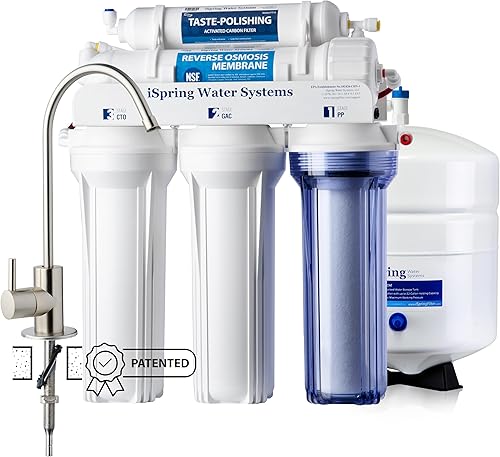
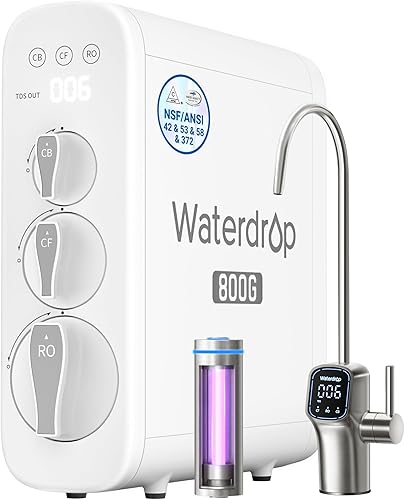
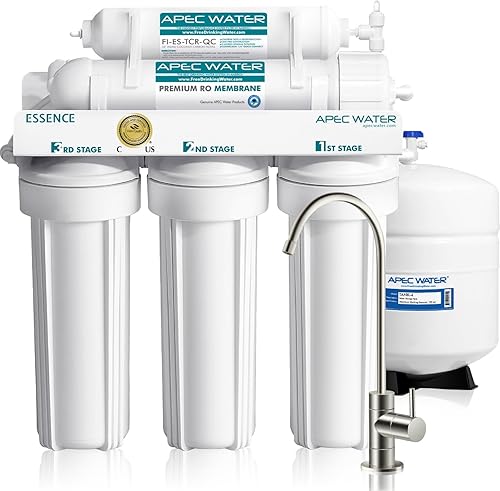
A quality reverse osmosis system pushes tap water through a semi-permeable membrane that rejects 95–99% of total dissolved solids. The result is soft, slightly acidic water with a TDS reading typically between 5 and 15 ppm — close to natural rainwater, which is what most bonsai species evolved to drink. Unlike pitcher filters or carbon-only systems, RO actually removes the salts; it doesn't just trap chlorine taste.
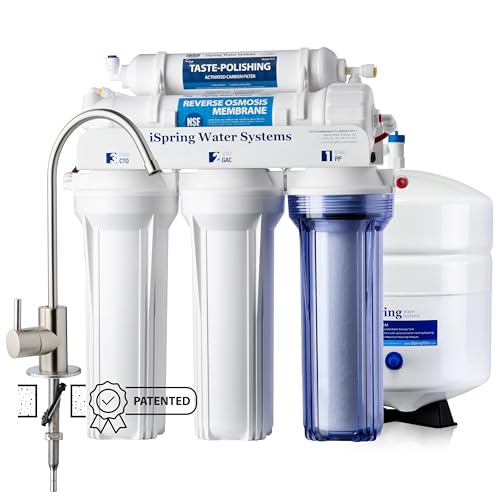
- EFFECTIVELY REDUCES CONTAMINANTS - The iSpring RO system delivers clean, pure, and great-tasting drinking water by removing up to 99% of over 1,000 harmful contaminants, including
- CERTIFIED TO NSF/ANSI 58 - Produced to strict American quality standards, this iSpring reverse osmosis system is NSF/ANSI 58 certified. For over 15 years, it has provided American
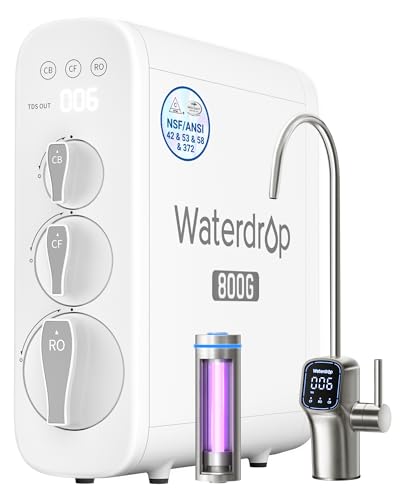
- [10-Stage filtration] Tested by official third-party laboratory (SGS), through 10-stage filtration, G3P800 can effectively reduce PFAS, fluoride, heavy metals like lead, chromium
- [800 GPD high capacity, 3:1 pure to drain ratio] The Waterdrop G3P800 reverse osmosis system offers a higher water capacity (800 gallons per day), thereby meeting demands of a big
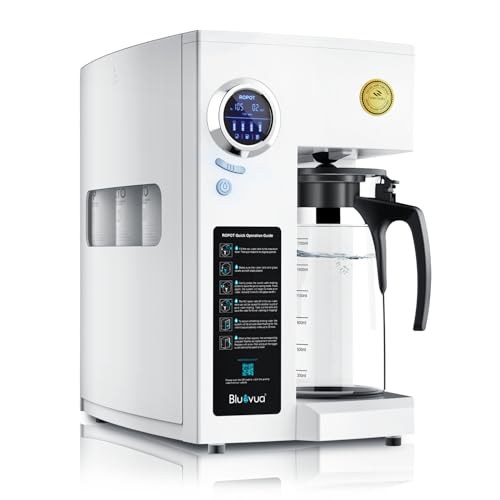
- COUNTERTOP FILTRATION + PREMIUM-QUALITY CARAFE: No plumbing or installation is required for this RO system. Simply plug this portable piece of tech into any power source, and
- POWER SAVING + WATER SAVING: The water system automatically enters a power-saving standby mode when not in use to reduce power consumption. Filters are also designed to help save
Comparison: Top RO Systems for Bonsai Use
| System | Type | Capacity | Pure-to-Drain | Best For |
|---|---|---|---|---|
| Waterdrop G3P800 | Tankless under-sink | 800 GPD | 3:1 | Large outdoor benches |
| APEC ROES-50 | Tank under-sink | 50 GPD | ~1:3 | Indoor / small collections |
| iSpring RCC7 | Tank under-sink | 75 GPD | ~1:3 | Mid-size collections |
| Bluevua RO100ROPOT | Countertop, portable | ~50 GPD | 2:1 | Apartments, renters |
| Express Water RO5DX | Tank under-sink | 50 GPD | ~1:3 | Budget builds |
What to Look for in an RO System for Bonsai
The best reverse osmosis system for bonsai trees isn't necessarily the one with the most bells and whistles — it's the one matched to your collection size and water source.
- Skip the alkaline/remineralization stage. Most under-sink RO systems sold today add a pH+ cartridge that re-introduces calcium and magnesium. That's great for human drinking water, but it defeats the purpose for bonsai. Look for systems where the final remineralization stage is optional or can be bypassed.
- GPD (gallons per day) capacity. A handful of shohin in a tokonoma? 50 GPD is plenty. A backyard bench with 30+ trees through a hot summer? You want 400 GPD or higher, or a tank-based system with a 3–4 gallon reservoir.
- Pure-to-drain ratio. Older 50 GPD units waste 3–4 gallons of water per gallon produced. Modern tankless models hit 1:1 or 2:1 — a meaningful difference if you're filling 5-gallon watering cans daily.
- TDS meter or monitoring. A built-in or in-line TDS meter tells you when the membrane is failing. Bonsai watering tolerates a creeping TDS far less forgivingly than a kitchen faucet.
- Installation realities. Renters and apartment hobbyists are better served by a countertop or portable RO that needs no plumbing changes.
Our Top Picks for Bonsai Enthusiasts in 2026
1. Waterdrop G3P800 — Best for Serious Collections
If you're running a backyard bench of 25–75 trees and watering twice a day in summer, the Waterdrop G3P800 is the workhorse you want. At 800 GPD with a tankless design, it produces water on demand at roughly the same flow rate as your kitchen faucet — you can fill a 5-gallon watering can in under a minute. The 8-stage filtration is NSF/ANSI 42, 53, 58, and 372 certified, the 3:1 pure-to-drain ratio is genuinely efficient, and the integrated TDS display lets you spot a failing membrane before your trees do. Crucially, there is no remineralization stage, so you get true low-TDS soft water straight out of the tap. Browse it on Waterdrop G3P800 Reverse Osmosis System.
2. APEC Water ROES-50 — Best Reliable Under-Sink for Indoor Collections
The APEC ROES-50 is the system most veteran bonsai hobbyists eventually settle on for a reason: it's boringly reliable, NSF-certified, made in the USA, and the 5-stage configuration ends with a coconut-shell carbon polish — no alkaline cartridge muddying the water. The 50 GPD output paired with a 3-gallon storage tank is ideal for indoor tropicals, mame, and shohin collections where you're not draining the tank twice a day. Membrane life routinely hits 3–5 years on municipal water. Check the current price on Amazon, and for a deeper breakdown see our APEC ROES-50 review.
3. iSpring RCC7 — Best Mid-Capacity Tank System
The iSpring RCC7 splits the difference between the APEC and the Waterdrop. Its 75 GPD output and standard 3.2-gallon tank handle medium-sized collections well, the patented top-mounted faucet design makes filter changes painless, and it's also a non-alkaline 5-stage build — perfect for bonsai use. iSpring's customer support is one of the best in the category if you ever need a replacement fitting. See it on Amazon, and for more analysis read our iSpring RCC7 review.
4. Bluevua RO100ROPOT — Best Countertop Option for Apartments
Renters and apartment growers face a real problem: no under-sink plumbing access and no permission to drill. The Bluevua RO100ROPOT solves it. You pour tap water into the top reservoir, push a button, and dispense soft RO water on demand — no installation. It's WQA-certified, has a 5-stage cartridge stack, and the standard non-UV version skips alkaline remineralization. For a small balcony or indoor display of 5–15 trees, this is the easiest entry point. Available on Bluevua RO100ROPOT Countertop Reverse Osmosis Water Filter System.
5. Express Water RO5DX — Best Budget Pick
If you're just getting into bonsai or testing whether RO water actually makes a difference for your specific species, the Express Water RO5DX is the lowest-risk way to start. It's a straightforward 5-stage NSF-certified 50 GPD system at a price point well below the APEC and iSpring competition, and replacement filters are inexpensive and widely available. The build quality is a step below the premium picks, but for a 1–2 year trial it's hard to argue with. Browse the Express Water RO5DX on Amazon, or read our full RO5DX review before deciding.
How to Use RO Water for Bonsai Without Killing Them
One word of caution that surprises new growers: pure RO water has essentially zero dissolved minerals, including the small amounts of calcium and magnesium that bonsai do need. If you water exclusively with unmodified RO and use only a high-quality organic-poor inorganic substrate (akadama, pumice, lava), trace deficiencies can show up within a year.
The fix is simple. Either (a) feed slightly more frequently with a balanced liquid fertilizer like Biogold or fish emulsion, which supplies the trace minerals your tap water used to, or (b) cut your RO water 70/30 with rainwater or even mineral water during the growing season. Many serious growers use 100% RO for sensitive species (azaleas, white pines, Korean hornbeam) and a 70/30 RO/tap mix for tougher tropicals like ficus and Chinese elm.
The best reverse osmosis system for bonsai trees still requires a thoughtful fertilizer schedule — it doesn't replace one.
Should You Get a Whole-House System Instead?
If you also water a greenhouse, run a humidifier setup near your indoor benches, or have other soft-water needs, a whole-house solution combined with a point-of-use RO can make sense. For most bonsai hobbyists, though, a single under-sink or countertop RO at the kitchen tap delivers all the water you'll realistically use. You can review the broader category trade-offs in our guide on how to choose the right reverse osmosis system or our 2026 roundup of best under-sink RO systems.
Frequently Asked Questions
Is reverse osmosis water actually better than rainwater for bonsai?
They're functionally similar. Both are very low in dissolved solids and slightly acidic. Rainwater is technically the gold standard because it contains trace atmospheric nitrogen, but it's seasonal, hard to collect in volume, and increasingly contaminated in industrial areas. RO water gives you the consistency of rainwater year-round, with predictable TDS, and is generally cleaner than rainwater collected from a shingle roof.
What TDS reading should bonsai watering water have?
For sensitive species like Satsuki azalea, Japanese white pine, and Korean hornbeam, aim for under 30 ppm. For most deciduous and tropical bonsai, anything under 80 ppm is fine. Tap water in many U.S. cities runs 200–500 ppm, and well water can exceed 600 ppm — both are problematic over time. A quality RO system will deliver 5–20 ppm out of the membrane.
Will an alkaline or remineralization RO filter hurt my bonsai?
It won't kill them, but it partially defeats the purpose. Alkaline cartridges add calcium and magnesium back into the water to raise pH for human drinking, which gradually re-creates the mineral buildup problem in your soil. If you already own an alkaline RO system, bypass the final stage by removing the pH+ cartridge or installing a T-fitting before it for a dedicated bonsai tap.
How much RO water does a bonsai collection actually need?
A rough rule of thumb: 1–2 quarts per tree per watering during summer for medium-sized trees. A 20-tree collection watered twice daily in July can easily consume 15–20 gallons a day. That's well within the range of a 400+ GPD tankless system but will outrun a 50 GPD tank-based system unless you stage watering across the day.
Can I use RO water for misting and humidity trays too?
Yes, and you absolutely should. Misting with hard tap water leaves white calcium spots on leaves and bark — visually unattractive on display trees and a long-term irritant on smooth-barked species like beech and maple. RO water mists clean and evaporates without residue.
Do I need a booster pump for RO if I want it for bonsai?
Only if your home water pressure is below 50 psi, which is common in older houses, mobile homes, and apartments. Low pressure dramatically reduces both the output and the rejection rate of the membrane, meaning your TDS reading creeps up. A booster pump like the one included in the iSpring RCC7P pays for itself in membrane longevity.
How often will I need to replace filters and the RO membrane?
Sediment and carbon pre-filters: every 6–12 months. The RO membrane itself: every 2–5 years on municipal water, sooner on well water. A built-in TDS meter is the most reliable signal — when output TDS climbs above 20% of source TDS, the membrane is done. See our guide on maintaining a reverse osmosis water filter for the full schedule.
Final Verdict
For most bonsai enthusiasts, the right answer is the Waterdrop G3P800 if your collection is large and outdoor, the APEC ROES-50 if it's small to medium and indoor, and the Bluevua RO100ROPOT if you can't install under your sink. Match the system to your collection — not the other way around — and your trees will tell you you made the right call within a single growing season.
Key Takeaways
- Choosing the right best reverse osmosis system for bonsai trees means matching the key features to your specific needs and budget
- Read real customer reviews and check the return policy before you commit
- Also covers: bonsai watering RO system
- Also covers: soft water for bonsai juniper
- Also covers: best RO for shohin bonsai
- Compare value across models — the priciest option is not always the best fit