As an Amazon Associate this site earns from qualifying purchases.
If you are searching for the best reverse osmosis system for dental clinic autoclave sterilization, you need a unit that consistently delivers feed water below the TDS thresholds your sterilizer manufacturer specifies (commonly under 50 ppm, often under 10 ppm), produces enough gallons per day to keep up with daily instrument cycles, and rejects the silica, calcium, and chloride that destroy heating elements, gaskets, and chamber walls. For most practices, that points to a high-flow tankless system or a light-commercial RO with at least a 300–1000 GPD membrane, no remineralization stage, and easy filter access for staff.
Below we walk through the technical criteria, then recommend specific real-world units that match small, medium, and high-volume operatories.
Why your autoclave needs reverse osmosis water
Steam sterilizers boil feed water in a small chamber repeatedly. Every mineral the water carries is left behind as scale: calcium and magnesium harden onto the heating element, silica forms a glaze that resists descaling chemicals, and chloride pits stainless steel chambers and instrument trays. Within a few months, an autoclave fed with municipal tap water will throw error codes, fail spore tests, or simply stop reaching sterilization temperature.
Most major sterilizer manufacturers — Midmark, Tuttnauer, SciCan Statim, Pelton & Crane, and others — publish feed-water specifications in their user manuals. The values vary, but they typically cluster around: total dissolved solids below 5–50 ppm, chloride below 2–3 mg/L, hardness under 0.1 mmol/L, conductivity under 50 µS/cm, and pH between 5 and 7. A properly tuned reverse osmosis system hits every one of those numbers and does it at a fraction of the per-gallon cost of buying distilled jugs.
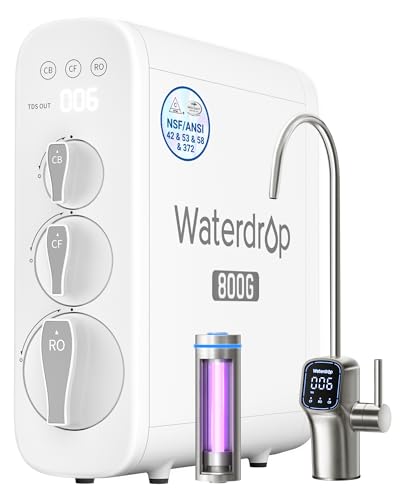
- [10-Stage filtration] Tested by official third-party laboratory (SGS), through 10-stage filtration, G3P800 can effectively reduce PFAS, fluoride, heavy metals like lead, chromium
- [800 GPD high capacity, 3:1 pure to drain ratio] The Waterdrop G3P800 reverse osmosis system offers a higher water capacity (800 gallons per day), thereby meeting demands of a big
- HIGH-EFFICIENCY COMMERCIAL-SIZE RO MEMBRANE - Removes up to 99% of over 1,000 contaminants, including lead, chlorine, fluoride, arsenic, asbestos, calcium, sodium, and more. Its
- 4-STAGE WATER FILTRATION - Equipped with commercial-grade filters: a 20” x 4.5” PP Sediment Filter with a transparent housing for easy monitoring, two 20” x 4.5” Carbon Block
Comparison of clinical RO picks
| System | Output | Stages | Best For | Tank |
|---|---|---|---|---|
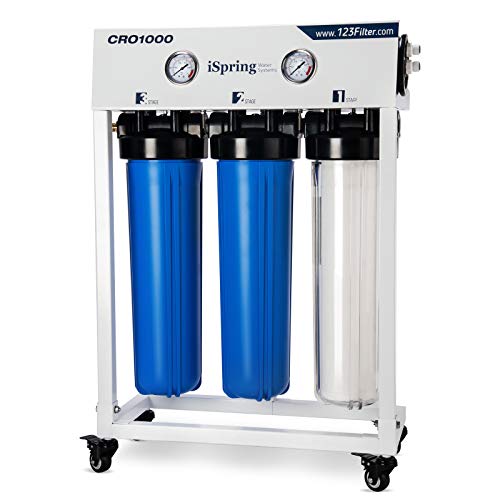
| iSpring CRO1000 | 1000 GPD | 4 | Multi-operatory, light commercial | Tankless |
| iSpring RCB3P | 300 GPD | 5 | 2–3 chair practice, low pressure | Tankless w/ pump |
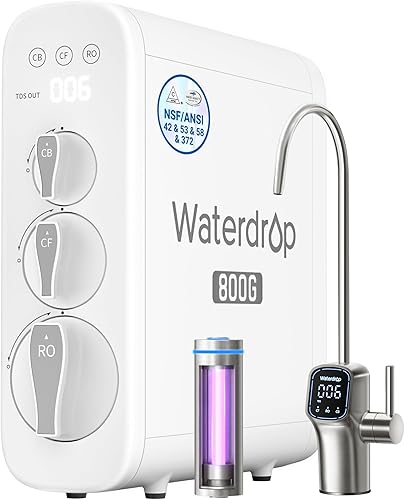
| Waterdrop G3P800 | 800 GPD | 8 | Busy private practice | Tankless |
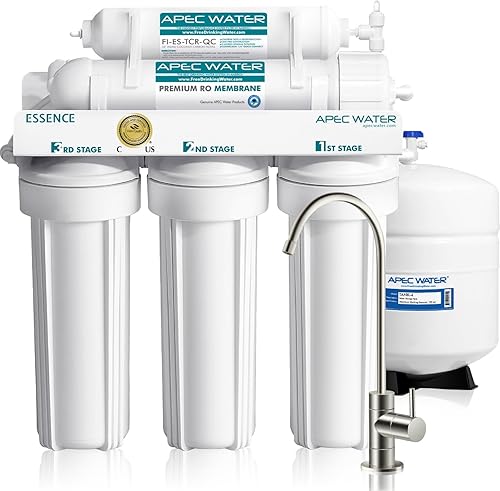
| APEC ROES-50 | 50 GPD | 5 | Solo provider, backup unit | Tank |
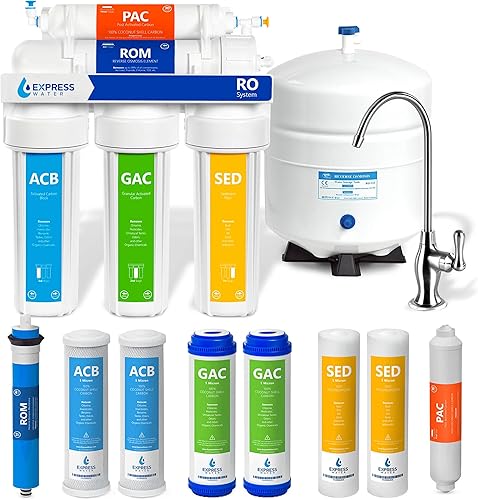
| Express Water RO5DX | 50 GPD | 5 | Budget conscious small clinic | Tank |
What makes the best reverse osmosis system for dental clinic autoclave use
Not every residential RO is appropriate for the operatory. When evaluating units for a clinical setting, prioritize:
- Daily output (GPD). A solo practitioner running two chairs may sterilize 5–10 gallons a day. A four-operatory practice with hygiene can hit 25–40 gallons. Pick a GPD rating that comfortably exceeds your peak day.
- No remineralization stage. Alkaline cartridges and post-mineral filters are great for drinking water and terrible for autoclaves — they put minerals right back into the water you just purified.
- Membrane quality and TDS rejection. Look for 95–99% TDS reduction. NSF/ANSI 58 certification is the strongest signal.
- Booster pump. Clinical buildings often have inconsistent line pressure. A pump keeps recovery rates and rejection percentages stable.
- Storage or tankless flow. Autoclaves usually pull a few liters at a time. A small pressure tank or a tankless unit with strong on-demand flow both work; tankless wins on bench space.
- Serviceability. Quick-connect cartridges let an assistant swap filters during lunch instead of calling a plumber.
- Use the dedicated permeate line, not the faucet output. Tee directly off the post-membrane line so you bypass any remineralization or polishing stage.
- Install a low-flow shutoff at the autoclave reservoir. A simple float valve prevents overflow when staff forget to dump the tray.
- Drain to a code-approved air gap. Health departments will check this. The brine line must not connect directly to the sanitary drain.
- Mount a TDS meter inline. Either a simple handheld used during morning instrument processing or a permanent inline meter. Document readings in your sterilization log.
- Test feed water against manufacturer spec. Do not assume your sterilizer accepts "RO water" — verify against the specific TDS, chloride, and pH window in your unit's manual.
- Weekly: log TDS at the autoclave inlet. Action threshold = sterilizer manufacturer spec.
- Monthly: visually inspect for leaks, check pressure gauge (if equipped), confirm drain air gap is clear.
- Every 6 months: replace sediment and carbon prefilters on residential-sized units, annually on 20-inch commercial prefilters.
- Every 2–3 years: replace the RO membrane, or sooner if TDS rejection drops below 90%.
- Annually: sanitize the system with a food-grade peroxide or NSF-rated sanitizer per the manufacturer's procedure.
iSpring CRO1000 — the best reverse osmosis system for dental clinic autoclave water at scale
If you run more than two chairs and use a chamber autoclave (not just a chairside Statim), the iSpring CRO1000 is hard to beat. It is a four-stage light-commercial unit rated for 1000 gallons per day with oversized 20-inch sediment and carbon prefilters that protect the RO membrane far longer than residential 10-inch cartridges. Because it is tankless, you can mount it on a wall in the mechanical room and run a dedicated 1/4 or 3/8-inch line directly to the autoclave reservoir.
What I like most about this unit for clinical work: the higher membrane area gives you faster recovery between sterilization cycles, the larger prefilters mean less frequent cartridge changes (typically every 6–12 months instead of every 3), and there are no post-mineralization stages to disable. iSpring CRO1000 4-Stage Tankless Commercial Reverse Osmosis Water.
iSpring RCB3P — tankless 300 GPD with a built-in booster pump
Many clinical buildings, especially older medical-dental towers, have inconsistent water pressure on the upper floors. The iSpring RCB3P solves that problem with an onboard booster pump and a pressure gauge so you can verify the membrane is actually being fed at 60–80 psi. Output is 300 GPD with a 1.5:1 pure-to-drain ratio, which is excellent for a unit at this price point.
This is the unit I would recommend for a two-or-three-operatory practice with a single tabletop autoclave and a Statim. It produces enough water to keep up with a heavy hygiene day, and the included pressure gauge lets your assistant catch a fouling prefilter weeks before TDS drift would show up at the sterilizer. iSpring RCB3P Tankless Reverse Osmosis Filtration System.
Waterdrop G3P800 — high-flow tankless for busy practices
The Waterdrop G3P800 is a residential system, but its eight-stage filtration, 800 GPD throughput, and 3:1 pure-to-drain ratio make it a genuinely viable autoclave feed source for a busy general practice. NSF/ANSI certifications cover standards 42, 53, 58, and 372 — the four most relevant to clinical safety.
The smart LED faucet is honestly not useful in a sterilizer-feed application (you will plumb directly to the autoclave reservoir), but the TDS-monitoring LEDs on the unit itself are handy for verifying performance during the morning huddle. Pair it with a dedicated bypass valve so you can isolate the unit during membrane swaps without taking the operatory offline. Waterdrop G3P800 Reverse Osmosis System.
APEC ROES-50 — budget pick for a solo practice or backup line
For a one-chair endodontic or oral-surgery practice, or as a secondary water source you can swap in during membrane changes on a primary unit, the APEC ROES-50 is the cleanest, simplest option. NSF certifications 372 and 58, five stages, and a track record that goes back over a decade. It includes a small pressurized tank so the autoclave can pull a few liters quickly without straining the membrane.
The 50 GPD rating is modest, but the tank means peak-hour pulls are handled fine for low-volume operatories. Skip this if you sterilize more than one full chamber load per hour. APEC Water ROES-50 5-Stage Under Sink Reverse Osmosis System. You can also read our full APEC ROES-50 review for a closer look at install and longevity.
Express Water RO5DX — most affordable clinical entry point
If you are opening a brand-new practice and trying to keep startup costs down, the Express Water RO5DX delivers the same five-stage architecture as the APEC ROES-50 at a slightly lower price point. NSF 372 and 58 certifications confirm material safety and contaminant rejection. It is a fine first-year solution that you can later promote to a backup unit once you upgrade to a CRO1000 or RCB3P. Express Water RO5DX 5-Stage Under Sink Reverse Osmosis Water Filter.
Installation notes for the operatory
A few things differ when you plumb an RO to a sterilizer instead of a kitchen faucet:
For deeper background on filtration choice and architecture, see our guide on how to choose the right reverse osmosis system.
Maintenance schedule for a clinical RO
Dental clinics have higher accountability than a household kitchen. Build the RO into your weekly and quarterly checklists:
Our full RO maintenance guide walks through each of those steps with photos.
Frequently Asked Questions
What TDS level does my dental autoclave need from the RO system?
Most modern dental sterilizers specify feed water under 50 ppm TDS, and many premium units (Statim, certain Tuttnauer models) require under 5–10 ppm. A well-maintained RO with 95–99% rejection on municipal water that starts at 200–400 ppm will produce 4–20 ppm output — within spec for virtually every sterilizer on the market. Always cross-reference your specific autoclave manual before commissioning the system.
Can I use a residential reverse osmosis system for a dental clinic autoclave?
Yes, for low-volume practices. A residential 50–100 GPD unit with a pressure tank is perfectly adequate for a one- or two-chair office sterilizing under 10 gallons per day. Once you exceed that, move to a tankless 600–1000 GPD unit or a light commercial system like the iSpring CRO1000 — they recover faster between draws and use larger filters that last longer in continuous service.
Do I need distilled water instead of reverse osmosis water for my autoclave?
Distilled water is the historic gold standard, but modern RO water that meets the sterilizer manufacturer's TDS and conductivity specs performs identically in service. The economics are dramatically better with RO: a 1000 GPD system pays for itself within months versus buying distilled jugs, and you eliminate the ergonomic burden of staff hauling water containers.
Should the RO system have a remineralization or alkaline stage for clinical use?
No. Remineralization and alkaline cartridges intentionally add calcium and magnesium back into the permeate water — the exact opposite of what an autoclave wants. If your existing system has one of these stages, either bypass it for the sterilizer feed line or choose a model without remineralization, like the iSpring CRO1000 or the basic APEC ROES-50.
How often should I change filters on a dental clinic RO system?
For light-commercial units with 20-inch prefilters, plan on annual sediment and carbon changes plus a membrane swap every 2–3 years. For residential 10-inch units running at clinical volume, cut those intervals roughly in half: prefilters every 6 months, membrane every 1–2 years. The objective indicator is TDS rejection — when it drops below 90%, change the membrane regardless of calendar age.
What contaminants beyond minerals does an RO system remove from autoclave feed water?
Reverse osmosis membranes reject chloride, fluoride, silica, heavy metals like lead and arsenic, PFAS compounds, and a broad range of dissolved organics. For sterilizer service, the chloride and silica rejection matter most — chloride pits stainless steel chambers and silica forms an insoluble glaze that resists descaling. Our deep dive on what contaminants RO removes covers the full list.
Can a tankless RO keep up with back-to-back autoclave cycles?
A 600–1000 GPD tankless unit can sustain 0.4–0.7 gallons per minute of permeate — enough to refill a typical tabletop autoclave reservoir in under five minutes. For practices that run cycles back-to-back during peak hygiene blocks, either step up to the 800 or 1000 GPD class, or add a small atmospheric reservoir between the RO and the sterilizer to buffer demand.
Key Takeaways
- Choosing the right best reverse osmosis system for dental clinic autoclave means matching the key features to your specific needs and budget
- Read real customer reviews and check the return policy before you commit
- Also covers: dental office RO water purifier
- Also covers: autoclave feed water RO system
- Also covers: dental practice sterilizer water filter
- Compare value across models — the priciest option is not always the best fit