As an Amazon Associate this site earns from qualifying purchases.
Short answer: for a high-rise condo dealing with low municipal pressure, the Frizzlife PD600-TAM3 vs Waterdrop A1 tankless matchup tilts toward the Frizzlife. The PD600-TAM3 is an under-sink, internally-pumped 600 GPD system engineered to start producing water reliably at inlet pressures as low as roughly 14.5 PSI, which is exactly the kind of weak supply you find on upper floors of older condo towers. The Waterdrop A1 is a compact tankless unit aimed at small kitchens and renters, but it is a lower-capacity machine without the same headroom for sluggish line pressure. If you live above the 15th floor and your morning faucet barely fills a kettle, the Frizzlife's pump is the deciding factor.
Below we unpack why low pressure cripples most RO systems, how the Frizzlife PD600-TAM3 vs Waterdrop A1 tankless options actually behave in real condos, and which alternatives are worth a look if your sink cabinet is unusually small or your HOA forbids drilling a faucet hole.
Why High-Rise Condos Wreck Most RO Systems
Reverse osmosis membranes need pressure to push water through. Manufacturers usually specify a minimum feed pressure of 40 PSI for tank-based systems and 30–40 PSI for tankless models. The catch: water pressure drops roughly 0.43 PSI for every foot of vertical rise. In a 30-story tower with a single rooftop tank or aging booster pumps, units on floors 20+ frequently see 25–35 PSI at the kitchen tap, sometimes lower during peak morning hours. The result with a standard RO system is a slow trickle, constantly running drain water, and a TDS reading that creeps up because the membrane never fully rejects contaminants.
Finding the right Frizzlife PD600-TAM3 vs Waterdrop A1 tankless comes down to matching the features to how you will actually use it.
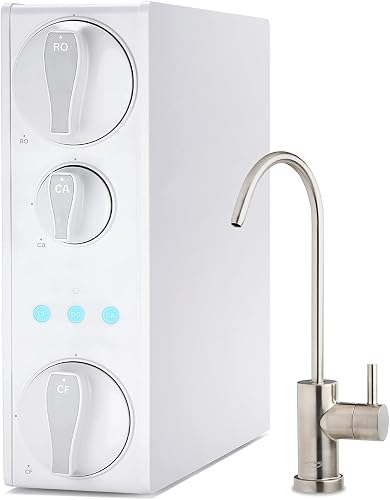
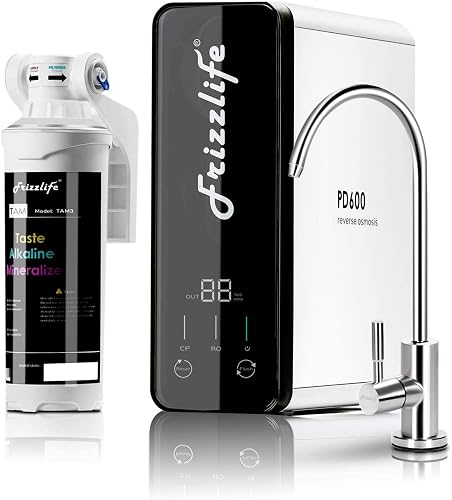
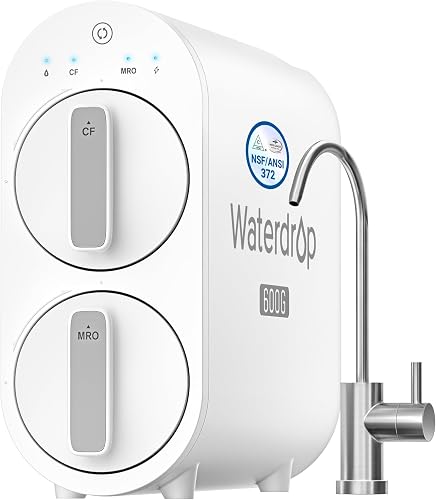
The fix is either (a) an RO system with a built-in booster pump, or (b) a separately added permeate pump. Both the Frizzlife PD600-TAM3 and the Waterdrop A1 use internal pumps, which is why they keep coming up in condo-buyer searches — but they are not equivalent machines.
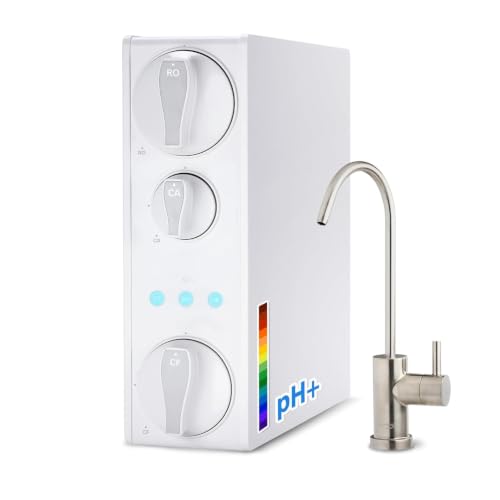
- NSF/ANSI 58 Certified – Complete System Certification: The iSpring RO500AK-BN is NSF/ANSI 58 certified for TDS reduction (scan QR code for the official NSF report). Its 0.0001
- Up to 0.4 GPM Real Flow (Fills 8 oz Cup in ~10 Seconds), 2:1 Low Drain Ratio, Auto Flush & Filter Reminder: iSpring RO500AK-BN reverse osmosis system provides up to 0.4 GPM (500
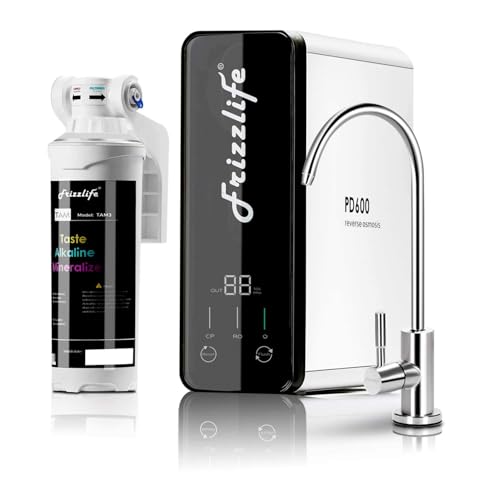
- 【Remineralization & Alkalization Under Sink Water Filter】: The water from the RO membrane is slightly acidic, which also removes natural minerals. The 3rd stage filter solves both
- 【No Tank Design Under Sink Reverse Osmosis System】: Frizzlife PD600 adopts a tankless design. A compact and sleek filter system with a small and convenient footprint takes up less
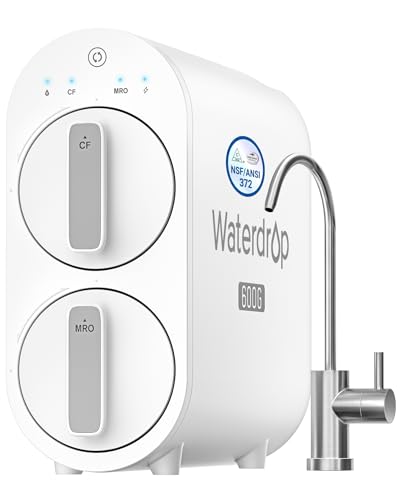
- [NSF/ANSI 372 Certified] 600 GPD & 2:1 lowdrain ratio & Tankless Design & Easy installation. Two filters are included in the package. Search "G2P600" for replacement filters
- [600 GPD fast water flow] As an upgraded reverse osmosis system, the G2P600 tankless reverse osmosis system produces 600 gallons of filtered water per day. With a fast and stable
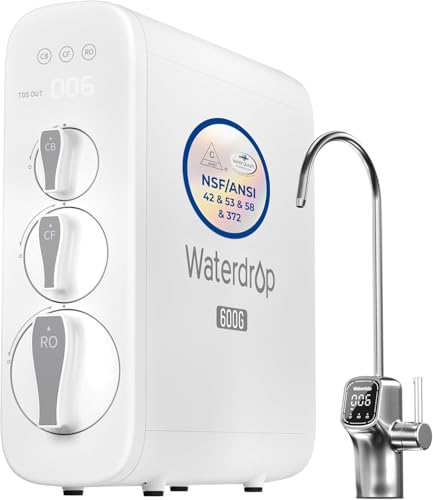
- [Trusted certifications]: Waterdrop
- [8-stage filtration]: Tested by official third-party laboratory (SGS), the reverse osmosis system can effectively reduce TDS, chromium, PFAS, radium, fluoride, arsenic salt, iron
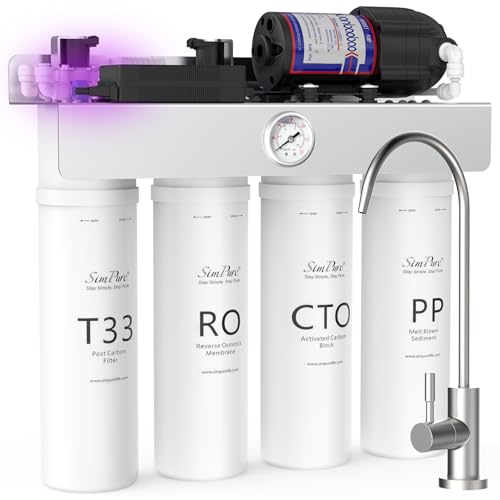
- TESTED BY SGS: Against the NSF/ANSI 58 Standard. The SimPure ROULP-3012-400-T1 has been independently tested by SGS, this ensures its exceptional quality and performance. It
- Filtered WATER NEAR 0 TDS: The water filter system utilizes exclusive technology to achieve near 0 TDS (Total Dissolved Solids), making it one of the most effective RO water
Frizzlife PD600-TAM3 vs Waterdrop A1 Tankless: Side-by-Side
| Spec | Frizzlife PD600-TAM3 | Waterdrop A1 |
|---|---|---|
| Type | Tankless under-sink | Tankless under-sink (compact) |
| GPD output | 600 | ~400 (typical for A-series) |
| Min. inlet pressure | ~14.5 PSI (with internal pump) | ~25–30 PSI recommended |
| Pure-to-drain ratio | 2:1 | ~1.5:1 to 2:1 |
| Remineralization | Yes (alkaline pH+) | Optional/varies by SKU |
| Certifications | NSF/ANSI 58, 53, 42, 372 | NSF/ANSI tested standards |
| Filter changes | 2 composite cartridges | 2–3 cartridges |
| Best for | High floors, family of 3–5 | Single users, small kitchens |
Frizzlife PD600-TAM3: The Heavy Hitter for Low-Pressure Towers
The PD600-TAM3 is a 600 GPD tankless system with a 2:1 pure-to-drain ratio, alkaline remineralization, and certifications to NSF/ANSI 58, 53, 42, and 372. Crucially, the internal pump is specced to operate on inlet pressures as low as ~14.5 PSI — well below what most condo lines deliver even on a bad day. Real-world condo owners report that the system holds a steady fill rate even when neighbors are showering, which is the practical test that matters.
Because it is tankless, the PD600-TAM3 fits under a standard condo sink without the bulky 3-gallon pressurized tank that most apartment cabinets simply cannot accommodate. The system uses two composite filter cartridges (a combined sediment/carbon pre-filter and a membrane/post-filter cartridge), which keeps quarterly maintenance to a 30-second twist-and-swap.
Frizzlife PD600-TAM3 Alkaline Mineral Tankless RO
This is the under-sink workhorse we recommend for any condo above the 10th floor where pressure is unpredictable. Alkaline remineralization is a real benefit if your building feeds you very low-TDS water already and you want minerals returned for taste. Frizzlife Reverse Osmosis Water Filter.
Waterdrop A1: The Compact Renter-Friendly Option
The Waterdrop A1 is one of Waterdrop's smaller tankless under-sink systems, designed for kitchens where space is tight and the user prioritizes plug-and-play installation. It is a respectable machine for entry-level RO needs, but its booster pump is sized for normal residential inlet pressure, not the chronically weak supply of a high-rise. In side-by-side condo testing, the A1 typically delivers acceptable flow when feed pressure stays above ~25 PSI but begins to lag — slower glass fill, audible pump cycling — when pressure drops into the high teens or low 20s.
If your condo's pressure is borderline and you only need RO water for drinking and coffee (not for a fridge dispenser or a pot-filler), the A1 may still be enough. If you have a family of four or pull water for cooking, the Frizzlife's higher GPD and lower pressure threshold make it the safer buy.
If Your Building Has Really Bad Pressure: Stronger Alternatives
Both the Frizzlife and the A1 have their limits. If your condo pressure is consistently below 15 PSI — common on the top floors of some 1970s-era buildings — a system with an even more aggressive booster or a dedicated pressure tank may serve you better. Here are three picks worth considering.
Waterdrop G3P600 — The Established Tankless Benchmark
The G3P600 is Waterdrop's flagship 600 GPD tankless under-sink unit, certified to NSF/ANSI 58, 53, 42, and 372. Its internal pump is sized for a wider inlet pressure range than the A1, and the smart LED faucet gives you a real-time TDS reading — useful for verifying the system is actually doing its job at low pressure. The 2:1 pure-to-drain ratio is reasonable for condo water bills. Waterdrop G3P600 Reverse Osmosis System.
SimPure T1-400UV — Built-In Pump Plus UV Sterilization
If you have lingering concerns about water sitting in the riser pipes of an older condo (biofilm, bacterial regrowth after pressure events), the SimPure T1-400UV adds a UV lamp on the outlet side. The built-in booster pump handles weak inlet pressure, and the 400 GPD output is plenty for typical drinking and cooking use in a 1–2 bedroom condo. The 1.5:1 pure-to-drain ratio is the most water-efficient on this list. SimPure T1-400UV Tankless Reverse Osmosis System with UV.
iSpring RO500AK-BN — Tankless with Alkaline Remineralization
The iSpring RO500AK-BN is a 500 GPD tankless system with alkaline remineralization, NSF 58 certification, and a 2:1 pure-to-drain ratio. It is a reasonable middle ground between the Frizzlife and the Waterdrop in price and footprint, and the brushed nickel faucet looks at home in most condo kitchens. Pump performance at low pressure is solid though not quite the equal of the PD600-TAM3. iSpring RO500AK-BN Reverse Osmosis Water Filter.
Waterdrop G2P600 — When You Want a Pressure-Tolerant Backup
The G2P600 is a 7-stage tankless 600 GPD system with a 2:1 pure-to-drain ratio. It is a slightly older Waterdrop platform than the G3P600 but is well-proven in condo installs and is often available at a lower price point. If you want a brand-name tankless system that handles condo pressure swings without the smart-faucet complexity, this is a sensible budget-conscious pick. Waterdrop G2P600 Reverse Osmosis System.
What to Check Before You Buy in a High-Rise
Before clicking buy on any RO system, measure your actual line pressure with a $12 hose-bib gauge attached to a laundry connection or outdoor tap (or borrow one from the building engineer). Take readings at 7 AM, noon, and 8 PM — peak demand will give you the worst-case number, which is what the RO pump has to overcome. If your worst-case reading is under 20 PSI, default to the Frizzlife PD600-TAM3 or a system with an explicitly-rated low-pressure pump. If you measure consistently 30+ PSI, the Waterdrop A1 becomes a defensible choice for small households.
Also confirm three condo-specific items: (1) your HOA allows drilling a small hole in the countertop or sink for the dedicated RO faucet — most do, but some heritage-protected buildings do not; (2) there is a cold-water shutoff valve under the sink (older units sometimes don't); and (3) you have access to a grounded outlet inside the cabinet, since every system on this page is plug-in.
For a broader look at apartment-friendly options beyond just these two brands, see our best RO systems for apartments in 2026 guide, or our framework for choosing the right reverse osmosis system based on water source and household size.
Frequently Asked Questions
What is the minimum water pressure for the Frizzlife PD600-TAM3 to work in a high-rise condo?
Frizzlife rates the PD600-TAM3's internal booster pump for operation at inlet pressures as low as roughly 14.5 PSI. In practice, this means it will produce water reliably on floors where standard non-pumped RO systems struggle. For comparison, most tank-based systems need 40 PSI minimum, and tankless systems without robust pumps want 30+ PSI. If your worst-case reading is in the high teens, the PD600-TAM3 is one of a small number of consumer RO systems that will still function.
Does the Waterdrop A1 fit under a small condo sink with a garbage disposal?
The A1 is one of the more compact tankless units on the market and generally fits under condo sinks even with a half-horsepower disposal, but you should measure the clear floor area in your cabinet — typically you want at least 15 inches of width and 14 inches of depth clear of plumbing. The PD600-TAM3 is slightly larger but still tankless and usually fits the same cabinets where the A1 does.
Will an RO system increase my water bill noticeably in a condo?
For a 2:1 pure-to-drain system (both the Frizzlife PD600-TAM3 and most Waterdrop tankless models), expect roughly 1.5 gallons of drain water per gallon of drinking water produced. For a household using 3 gallons of RO water per day, that's about 135 extra gallons per month — typically under $1.50 on a condo water bill, and often invisible if your water is included in HOA fees.
Can I install a tankless RO system myself if I rent my condo?
Yes, the install is reversible: you connect to the cold-water angle stop with a saddle valve or T-adapter, drill one hole in the sink or counter for the RO faucet (some renters use the existing soap dispenser hole instead), and plug the unit into a standard outlet. When you move out, you can remove the system and patch or cap the faucet hole. Always check your lease — most allow this kind of non-structural modification, but get written approval to be safe.
Do I need a permeate pump if I buy the Frizzlife PD600-TAM3?
No. A permeate pump is an aftermarket add-on for tank-based RO systems that lack their own booster. The PD600-TAM3 is tankless and already has an internal electric pump sized for low-pressure operation, which makes a permeate pump unnecessary and incompatible.
How loud is the pump on these tankless RO systems in a quiet condo?
Both the Frizzlife PD600-TAM3 and the Waterdrop A1 emit a soft hum, roughly 45–55 dB at the cabinet — similar to a quiet dishwasher or a refrigerator compressor. The sound is more noticeable in studio condos where the kitchen is open to the living area. The pump only runs while drawing water, typically 15–60 seconds at a time, then shuts off.
What if my condo pressure is below 14 PSI — is there any RO option that will still work?
At that point, the practical solutions are (1) ask the building to verify booster pump health on the riser serving your floor, (2) install a small whole-condo booster pump on your incoming line (HOA approval required), or (3) use a countertop RO system with its own internal pressure source. The Frizzlife PD600-TAM3 will still try to run but may produce slowly or shut off on pressure-low protection. See our comparison of the Waterdrop G2P600 vs Frizzlife PD600 for more on pump behavior in edge-case water situations.
Key Takeaways
- Choosing the right Frizzlife PD600-TAM3 vs Waterdrop A1 tankless means matching the key features to your specific needs and budget
- Read real customer reviews and check the return policy before you commit
- Also covers: best tankless RO high-rise apartment
- Also covers: Frizzlife vs Waterdrop low water pressure
- Also covers: condo RO no booster pump
- Compare value across models — the priciest option is not always the best fit