As an Amazon Associate this site earns from qualifying purchases.
To repressurize iSpring RCC7AK tank bladders after years of use, drain the tank completely, locate the blue plastic cap on the side of the tank, attach a low-pressure tire gauge to the Schrader valve underneath, and add air with a bicycle pump until the empty tank reads 7-8 PSI. Never pressurize a full tank, never exceed 10 PSI, and if the bladder won't hold pressure after recharging, the internal rubber diaphragm has failed and the tank itself needs replacement. Most RCC7AK tanks lose 1-2 PSI per year of normal service and need a top-off every 2-3 years.
If you've owned your iSpring RCC7AK for five or more years and noticed your drinking water faucet trickles instead of flows, or the tank feels heavy but produces only a cup or two before sputtering, the precharge air pressure has almost certainly bled off. This is one of the most common—and most fixable—failure modes for residential RO systems. Below is the exact procedure I use, the tools you actually need, and what to do if the bladder won't hold pressure anymore.
The best repressurize iSpring RCC7AK tank for your situation depends on how you plan to use it and where.
Why RCC7AK Tank Pressure Drops Over Time
The 3.2-gallon storage tank that ships with the RCC7AK is a steel pressure vessel divided internally by a flexible butyl rubber bladder. One side holds RO-filtered water, the other side holds compressed air that pushes water out when you open the faucet. From the factory, that air side is precharged to 7 PSI with the tank empty.
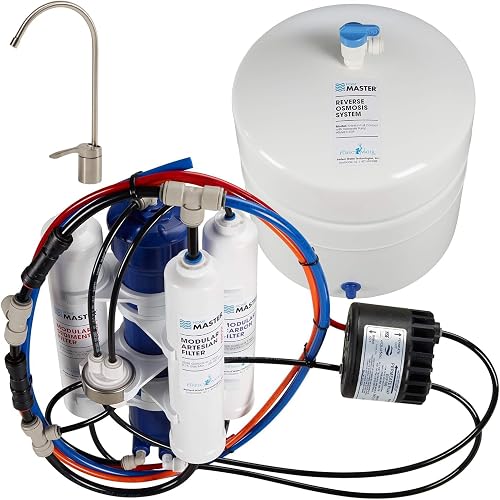

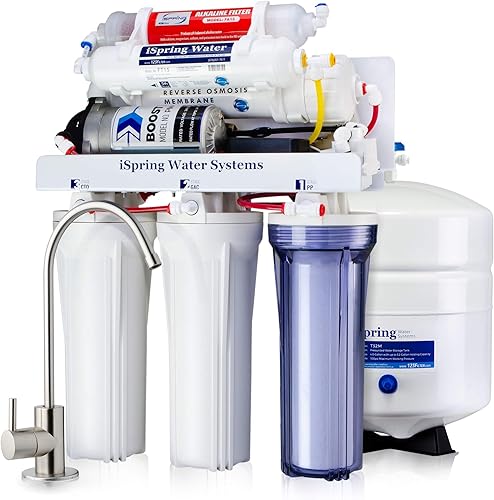
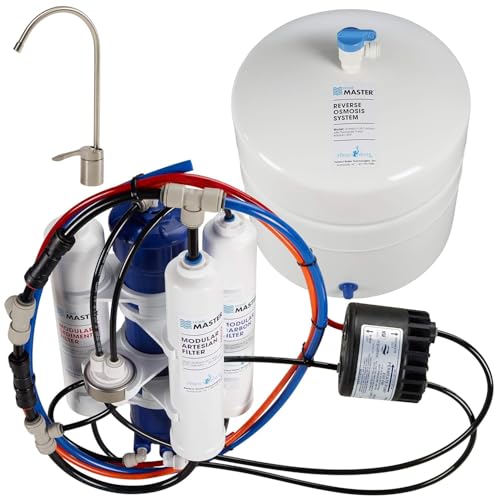
- Innovative RO System Design - Home Master Artesian Full Contact addresses common issues of canister and tankless systems with a unique, efficient design
- Enhanced Mineral Water - Features a patented remineralization system that adds essential minerals such as calcium and magnesium twice during the purification process, ensuring
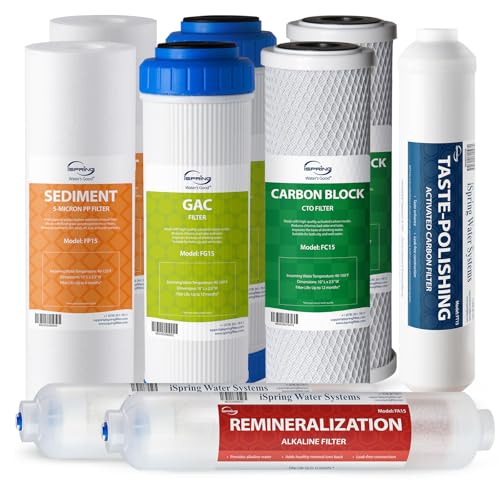
- 【1-Year Water Filtration Replacement Pack】This pack contains individually wrapped high-capacity filter replacement cartridges designed for 6-stage RO systems, providing a full
- 【Standard Size RO Replacement Cartridges】iSpring water filter cartridge set fits standard housings that require 10” x 2.5” reverse osmosis water filter cartridges
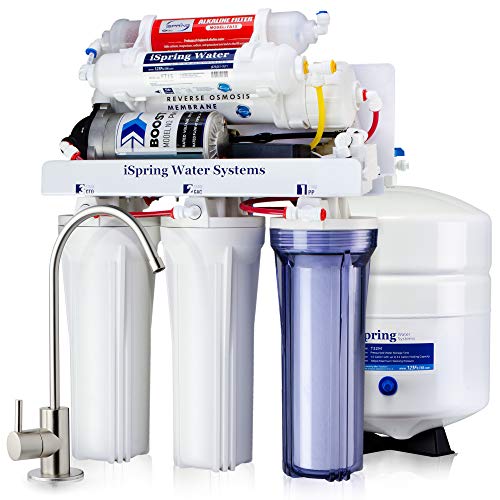
- BOOSTER PUMP FOR MAXIMUM PERFORMANCE - The durable electric booster pump ensures consistent high efficiency, providing reliable RO filtration even in homes with low water pressure
- HIGH-CAPACITY FILTRATION - Reduces up to 99% of over 1,000 contaminants, including lead (98%), chlorine, fluoride, arsenic, PFAS, asbestos, calcium, sodium, and more, ensuring
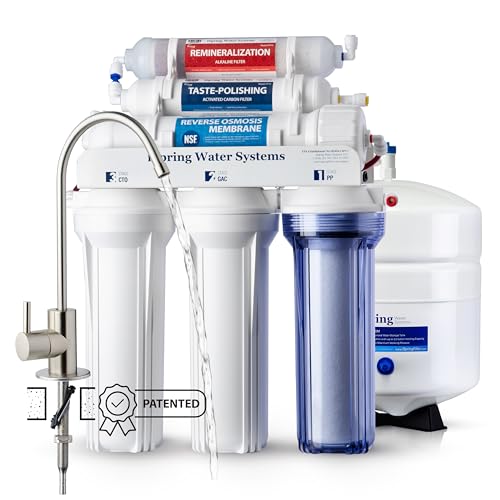
- PATENTED DESIGN – The top-mounted fastener allows for easy countertop installation entirely from above, eliminating the hassle of tightening the nut from underneath the sink
- MINERAL BOOST – The patent-pending natural mineral AK stage delivers spring water with a balanced, healthy pH and multiple essential minerals
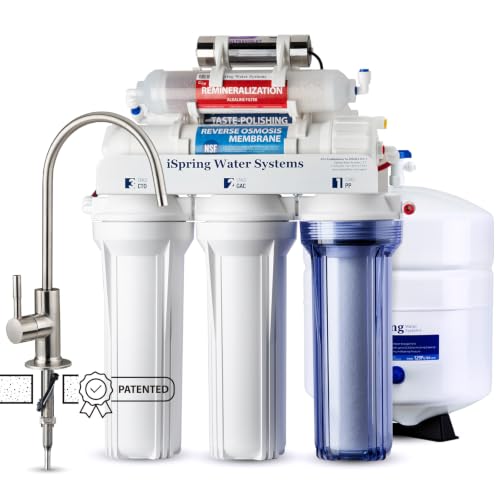
- UPGRADED LED UV PROTECTION - Built-in LED UV stage provides an extra layer of protection with a mercury-free, maintenance-free design. Smart flow activation turns on only when
- TRUE LAYERED FILTRATION - Built with individually layered filter cartridges instead of compressed composite filters, delivering deeper filtration with visible, full-volume media
iSpring RCC7AK Replacement and Upgrade Options
If your tank is beyond saving and you're already under the sink, this is the right moment to evaluate whether a refresh makes more sense than a repair.
| System | Stages | GPD | Tank Style | Best For |
|---|---|---|---|---|
| iSpring RCC7AK | 6 | 75 | 3.2 gal pressurized | Direct replacement, alkaline pH |
| iSpring RCC7AK-BLK | 6 | 75 | 3.2 gal pressurized | Same internals, black faucet |
| iSpring RCC7AK-UV | 7 | 75 | 3.2 gal pressurized | Well water with bacteria risk |
| iSpring RCC7P-AK | 6 | 75 | 3.2 gal + booster pump | Low feed pressure homes |
| Home Master TMAFC-ERP | 7 | 75 | 4 gal pressurized | Faster fill, larger tank |
Two things happen over years of use. First, butyl rubber is slightly permeable to air molecules, so even a perfectly intact bladder slowly leaks air through the membrane into the water side—where it eventually escapes through the faucet. Second, every time you draw water, the bladder flexes; after thousands of cycles, microscopic cracks form along the flex lines. The result is the same: precharge pressure drops, the tank holds less usable water, and flow at the faucet gets weaker even though the membrane and filters may be perfectly fine.
Most owners assume their RO membrane has failed when the real culprit is just a tired air charge. Routine tank maintenance can extend the life of an RCC7AK by five years or more.
Tools You Need Before You Start
- Low-pressure tire gauge (0-30 PSI range, not the 0-100 PSI version sold for car tires—you need accuracy at the low end)
- Bicycle floor pump with a standard Schrader fitting, or a small 12V air compressor
- Bucket and towels for the drain step
- Phillips screwdriver in case the blue cap is stuck
Skip the shop air compressor. They deliver 90-120 PSI in a burst that will blow the bladder apart instantly. A bike pump's slow, controlled stroke is exactly what this tank wants.
Step-by-Step: How to Repressurize the iSpring RCC7AK Tank
Step 1 — Shut off the feed water
Locate the saddle valve or feed water valve under your sink and close it. This stops new water from entering the RO system while you work on the tank.
Step 2 — Drain the tank completely
Open the RO faucet on your sink and leave it open. Water will flow, then trickle, then stop. Once it stops, the tank is empty of usable water but the bladder is still holding back the air charge. Leave the faucet open for the rest of the procedure—this gives the bladder somewhere to push water as you add air.
Step 3 — Close the tank ball valve and disconnect
Find the small ball valve on top of the storage tank (where the yellow or blue tubing connects). Turn it perpendicular to the tube to close it. This isolates the tank from the system so you can work on it safely. You don't need to physically disconnect the tubing, but tipping the tank on its side makes the air valve easier to reach.
Step 4 — Locate and uncap the Schrader valve
Near the bottom of the tank (or sometimes on the side near the base), there is a small blue or black plastic cover roughly the size of a dime. Pop it off—it's a friction fit. Underneath is a standard Schrader valve, identical to the air valve on a bicycle tire.
Step 5 — Measure current pressure
With the tank empty and the RO faucet still open, press a low-pressure gauge onto the Schrader valve. A healthy tank will read 6-8 PSI. A tank that needs service will often read 2-4 PSI, and a tank with a ruptured bladder will read zero and may spit water out of the valve when you press on it. If water comes out of the air valve, stop—the bladder has failed and the tank needs replacement, not recharging.
Step 6 — Add air in short bursts
Attach your bike pump and add 5-10 short strokes, then check pressure. The factory target for the empty RCC7AK tank is 7 PSI. Some installers prefer 8 PSI on systems with weaker incoming city pressure (below 50 PSI feed). Do not exceed 10 PSI under any circumstances—this is a thin-walled bladder, not a well tank.
Step 7 — Replace the cap and test
Put the blue cap back on, close the RO faucet, open the tank ball valve, and reopen the feed water. The tank will start refilling. Give it 2-3 hours to fill completely, then open the faucet and verify you get a steady stream of about 2-2.5 gallons of usable water before the flow weakens.
How to Tell If Your Tank Bladder Has Failed for Good
Recharging is only effective if the bladder is intact. After you add air and let the tank refill, draw a full glass of water and immediately recheck the air pressure. On a healthy tank, the pressure with water inside will read 30-40 PSI (because the water is compressing the air side). If it still reads 7 PSI with the tank full, the bladder has ruptured and air is escaping into the water chamber. In that case, the tank itself needs replacing—the steel shell is fine, but the bladder isn't user-serviceable.
A replacement 3.2-gallon RO tank costs $40-60 and uses the same fittings. Or, if your system is more than eight years old and the membrane is also tired, this is a reasonable moment to consider a full system replacement. See our iSpring RCC7 review for a sense of how the current generation compares to the older RCC7AK.
iSpring RCC7AK — The Direct Replacement
If you like your current system and just want to replace the tank and refresh the filters, the same RCC7AK is still the cleanest swap. Same fittings, same tubing routing, same faucet. The 6-stage configuration with the alkaline remineralization cartridge is what gives RCC7AK water its rounded mouthfeel that distinguishes it from bare RO. Check current pricing on iSpring RCC7AK 6-Stage Reverse Osmosis System.
iSpring RCC7P-AK — When Tank Pressure Was Never Enough
If your feed water pressure was always marginal (below 45 PSI) and you constantly fought weak flow even when the tank was new, the RCC7P-AK adds a booster pump that produces 75 GPD reliably regardless of incoming pressure. It also keeps tank pressure higher during draw, masking the early stages of bladder fatigue. iSpring RCC7P-AK.
iSpring RCC7AK-UV — For Well Water Systems
If your RCC7AK has been treating well water for years, the bladder failure may be coinciding with biological growth in the tank itself. The 7-stage RCC7AK-UV adds a UV sterilizer that kills bacteria after the RO membrane, which is the right call for any system where the source water isn't municipally chlorinated. iSpring RCC7AK-UV.
iSpring F9K — Refresh the Filters While You're In There
Whenever you tip a tank for service, you're likely overdue on cartridges anyway. The F9K is the matched 1-year filter set for any 6-stage RCC7AK including alkaline remineralization media. Doing the tank and the filters in the same visit means you won't be back under the sink for another year. iSpring F9K NSF Certified 1-Year Reverse Osmosis Water Filter.
Home Master TMAFC-ERP — A Tank with a Larger Reservoir
If you want a fully alkaline RO system with a bigger 4-gallon storage tank, faster fill rate, and a 1:1 waste ratio, the Home Master TMAFC-ERP is the closest competitor to the RCC7AK at the same price tier. The larger tank also masks bladder aging for longer because there's more headroom before flow becomes noticeably weak. Home Master TMAFC-ERP Artesian Full Contact Reverse Osmosis System.
Preventing Premature Bladder Failure
Three habits will keep your next tank healthier longer. First, check precharge pressure annually—it takes five minutes and catches problems before they affect flow. Second, never let the tank sit empty and pressurized for weeks at a time (vacation homes especially); the bladder lasts longer when it's flexing through normal use. Third, if your home's water pressure spikes above 80 PSI, install a pressure regulator before the RO feed; high incoming pressure shortens bladder life dramatically.
For more on extending the service life of every component in your RO system, see our guide to maintaining a reverse osmosis water filter.
Frequently Asked Questions
What PSI should an iSpring RCC7AK tank be charged to when empty?
The factory specification is 7 PSI with the tank fully drained. Some installers raise this to 8 PSI when the incoming feed water pressure is below 50 PSI to maintain stronger faucet flow. Never charge above 10 PSI—the bladder isn't rated for it, and you'll shorten its life significantly or rupture it outright.
How do I drain the iSpring RCC7AK tank completely before adding air?
Close the small ball valve on top of the tank, then open the RO faucet and leave it open. Water will flow for several minutes, then trickle, then stop. Once nothing comes out for two minutes, the usable water is gone. Leave the faucet open during the air-charging step so the bladder has room to push residual water out.
Why does my RCC7AK tank fill slowly even after I repressurize it?
Slow fill is usually not a tank problem at all. Common causes are a clogged sediment or carbon prefilter, a fouled RO membrane after 3+ years of service, low incoming line pressure (below 40 PSI), or a partially closed feed water valve. Replace prefilters every 6-12 months and the membrane every 2-3 years, and verify feed pressure with a gauge at the inlet.
Can I use a regular air compressor to repressurize my RO tank?
Technically yes, but it's risky. Shop compressors deliver air in 90-120 PSI bursts that can blow the bladder apart in a fraction of a second. If a compressor is all you have, use a regulated inflator attachment set to a maximum output of 15 PSI, and add air in 1-second pulses while watching the gauge. A $20 bicycle floor pump is safer and easier.
How long should an iSpring RCC7AK tank last before it needs replacement?
The steel tank shell typically lasts 10-15 years. The internal bladder is the wear item, usually good for 5-8 years of normal household use. If you repressurize the tank and it loses precharge within a few weeks, or if water comes out of the air valve when you press on it, the bladder has failed and the tank needs replacing. A replacement 3.2-gallon RO tank runs $40-60.
Will repressurizing the tank improve the taste of my RO water?
No—taste problems point to filter or membrane issues, not tank pressure. Tank precharge only affects flow and usable volume. If your water tastes off, replace the post-carbon polishing filter first, then the RO membrane if the issue persists. Our guide to RO filter maintenance covers cartridge replacement intervals in detail.
Is it safe to repressurize the RCC7AK tank while it still has water inside?
No. The bladder must be empty before you add air—otherwise you're compressing water (which doesn't compress) and you'll spike the air-side pressure well past safe limits in just a few pump strokes. Always drain through the open faucet until flow stops completely before connecting a pump to the Schrader valve.
Key Takeaways
- Choosing the right repressurize iSpring RCC7AK tank means matching the key features to your specific needs and budget
- Read real customer reviews and check the return policy before you commit
- Also covers: iSpring RCC7AK tank air pressure refill
- Also covers: RO tank bladder PSI fix
- Also covers: empty RO tank pressurize Schrader valve
- Compare value across models — the priciest option is not always the best fit