As an Amazon Associate this site earns from qualifying purchases.
To test Waterdrop G3 P600 TDS accuracy handheld meter readings side-by-side, you need a calibrated digital TDS pen (442 NaCl scale), a clean glass, a freshly flushed RO faucet, and roughly five minutes. Pour 8 oz of permeate from the G3 P600's smart faucet, take the on-faucet LED reading, then immediately dip your handheld meter into the same glass at room temperature. A healthy unit should show your handheld meter within ±10 ppm of the faucet display, which confirms the built-in sensor is honest and your membrane is rejecting contaminants as advertised.
Below is the full procedure, the gotchas that throw most DIY testers off, and what to do when the numbers disagree.
When shopping for test Waterdrop G3 P600 TDS accuracy handheld meter, it pays to compare specs, capacity, and real-world runtime before committing.
Why TDS Accuracy on the G3 P600 Matters
The Waterdrop G3P600 Reverse Osmosis System uses an inline TDS sensor that feeds the smart faucet LED ring — blue for great water, yellow for acceptable, red for filter change. That number is your only real-time feedback on whether the RO membrane is doing its job. If the on-board sensor drifts, the system can keep flashing blue while permeate quality quietly slides. That's why a periodic cross-check against a handheld meter is the single most useful piece of maintenance you can do on this unit.
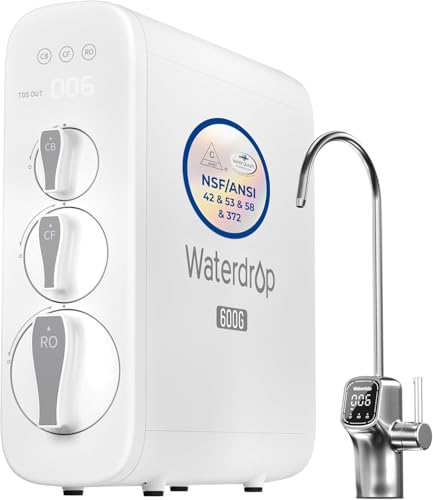
- [Trusted certifications]: Waterdrop G3P600 reverse osmosis system is certified against NSF/ANSI 58 for TDS reduction and NSF/ANSI 372 certified for lead-free material. Also it has
- [8-stage filtration]: Tested by official third-party laboratory (SGS), the reverse osmosis system can effectively reduce TDS, chromium, PFAS, radium, fluoride, arsenic salt, iron
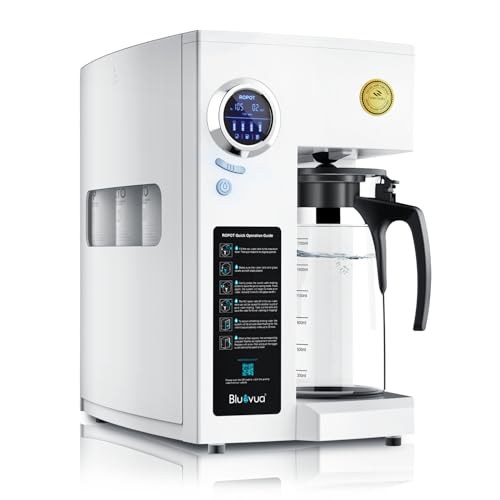
- COUNTERTOP FILTRATION + PREMIUM-QUALITY CARAFE: No plumbing or installation is required for this RO system. Simply plug this portable piece of tech into any power source, and
- POWER SAVING + WATER SAVING: The water system automatically enters a power-saving standby mode when not in use to reduce power consumption. Filters are also designed to help save
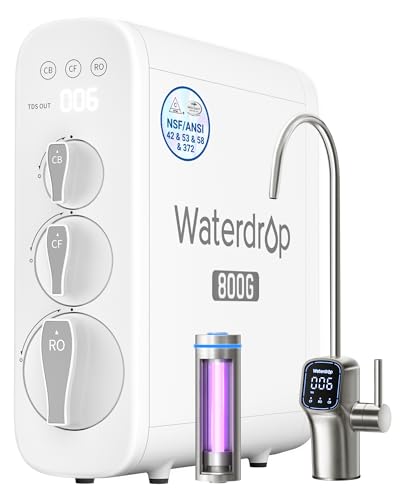
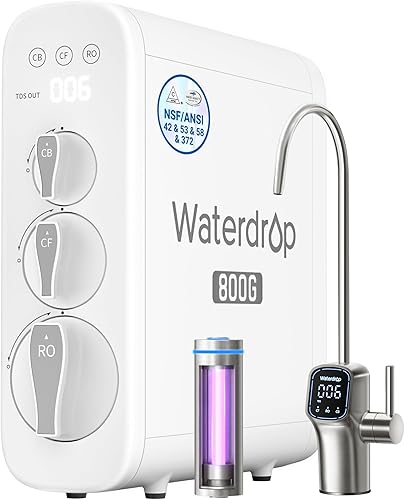
- [10-Stage filtration] Tested by official third-party laboratory (SGS), through 10-stage filtration, G3P800 can effectively reduce PFAS, fluoride, heavy metals like lead, chromium
- [800 GPD high capacity, 3:1 pure to drain ratio] The Waterdrop G3P800 reverse osmosis system offers a higher water capacity (800 gallons per day), thereby meeting demands of a big
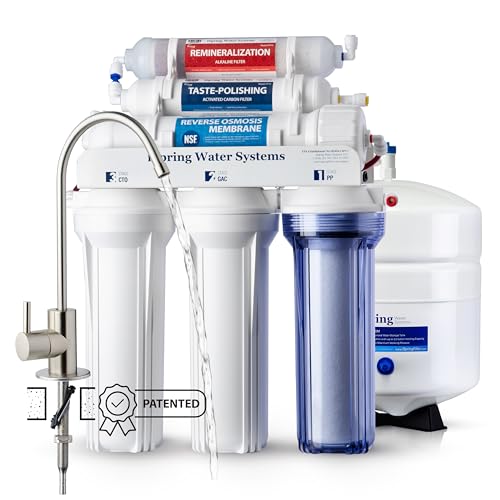
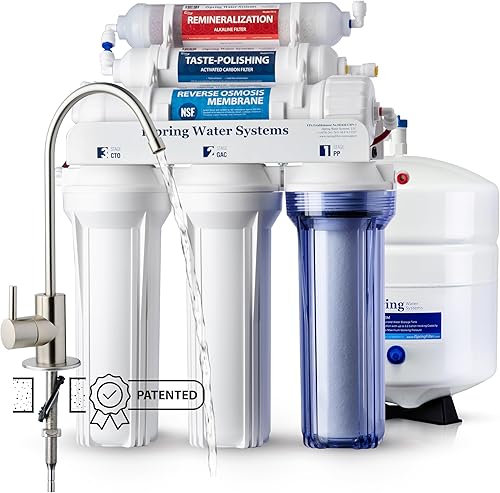
- PATENTED DESIGN – The top-mounted fastener allows for easy countertop installation entirely from above, eliminating the hassle of tightening the nut from underneath the sink
- MINERAL BOOST – The patent-pending natural mineral AK stage delivers spring water with a balanced, healthy pH and multiple essential minerals
Interpreting the Results
| Handheld vs G3 P600 Reading | What It Means | Action |
|---|---|---|
| Within ±10 ppm | Sensor accurate, membrane healthy | Log result, retest in 3 months |
| 11–25 ppm difference | Minor sensor drift or scale buildup | Run cleaning cycle, retest |
| 26–50 ppm difference | Significant drift or biofilm on probe | Replace pre-filters, flush membrane |
| 50+ ppm difference | Sensor failure or dead membrane | Contact Waterdrop support; consider membrane replacement |
| Handheld > 50 ppm permeate | Membrane failing regardless of sensor | Replace RO membrane immediately |
Manufacturers calibrate built-in sensors at the factory, but conductivity probes are sensitive to scale, biofilm, and temperature. After 6–12 months, a 5–15 ppm offset is normal. A 30+ ppm offset is a signal to investigate further.
What You Need Before You Start
- A handheld digital TDS meter (HM Digital TDS-3, Apera, or HoneForest are common, calibrated to the 442 NaCl scale).
- Two clean, rinsed glass cups (plastic can shed ions that skew readings).
- Calibration solution (342 ppm or 1000 ppm NaCl) — optional but recommended for a true reference test.
- Knowledge of your incoming feed water TDS (test from a non-RO cold tap).
- A notebook or notes app to log values over time.
Step-by-Step: Test Waterdrop G3 P600 TDS Accuracy Handheld Meter Comparison
Step 1: Calibrate Your Handheld Meter
Don't skip this. A handheld TDS pen that hasn't been calibrated in a year is just a number generator. Submerge the probe in 342 ppm solution, let the reading stabilize for 30 seconds, and adjust the trim screw or digital calibration until the display reads 342. If the pen is off by more than 5%, replace it before continuing.
Step 2: Measure Feed Water TDS
Fill a clean glass from your cold (non-RO) kitchen tap. Let it sit for 60 seconds to release dissolved CO2, then take a handheld reading. Record this as your feed TDS. You'll need it to calculate the membrane's rejection rate later.
Step 3: Flush the G3 P600 Faucet
Run the smart faucet for 30 seconds to clear any stagnant water from the post-carbon filter and faucet tubing. Stagnant water reads artificially high because dissolved CO2 forms carbonic acid, which raises conductivity.
Step 4: Capture a Sample and Read Both Meters
Pour fresh permeate into your second clean glass. Note the G3 P600 LED faucet TDS reading (touch the faucet ring or check the unit's display panel). Immediately dip your handheld meter into the glass. Wait for the handheld value to settle — usually 15–20 seconds. Record both numbers.
Step 5: Calculate the Difference and Rejection Rate
Subtract the two readings. If they're within ±10 ppm, your G3 P600 sensor is accurate. To find rejection rate: (Feed TDS − Permeate TDS) ÷ Feed TDS × 100. A new membrane should hit 90–98% rejection. Anything below 85% means it's time to investigate the membrane or pre-filters.
Step 6: Repeat at Different Times of Day
Take readings in the morning (after overnight stagnation), midday, and after heavy use. The G3 P600 is tankless, so it has no stored water to throw off readings — but municipal feed TDS does fluctuate. Multiple samples give you a true picture.
Recommended RO Systems With Reliable TDS Monitoring
Waterdrop G3 P600 — The Unit You're Testing
The G3 P600 is the model in question: 600 GPD, 8-stage tankless, NSF/ANSI 42, 53, 58, and 372 certified, with a smart LED faucet that displays TDS in real time. Its TDS sensor is one of the more accurate in the consumer market, but like all inline probes, it benefits from a periodic handheld cross-check. If you're shopping for a replacement or recommending one to a friend, the G3 P600 remains a top pick for households drinking 10+ gallons of filtered water per day.
Waterdrop G3P600 Reverse Osmosis System
Waterdrop G3P800 — The Higher-Capacity Sibling
If your G3 P600 testing reveals a struggling membrane and you're considering an upgrade, the Waterdrop G3P800 Reverse Osmosis System bumps capacity to 800 GPD with a 3:1 pure-to-drain ratio (vs the P600's 2:1). The TDS sensor architecture is nearly identical, so the same handheld cross-check method applies. The P800 is a better choice for households with 5+ people or hard well water that demands more membrane throughput.
iSpring RCC7AK — A Tank-Based Alternative for Verification
Some testers like having a second RO system on a different fixture for blind comparison. The iSpring RCC7AK 6-Stage Reverse Osmosis System is a 6-stage tank-based RO with alkaline remineralization. Because it adds minerals back after the membrane, expect 30–80 ppm of permeate TDS even with a perfect membrane — useful context if you're comparing G3 P600 numbers against another household RO system.
Bluevua RO100ROPOT — Portable Reference
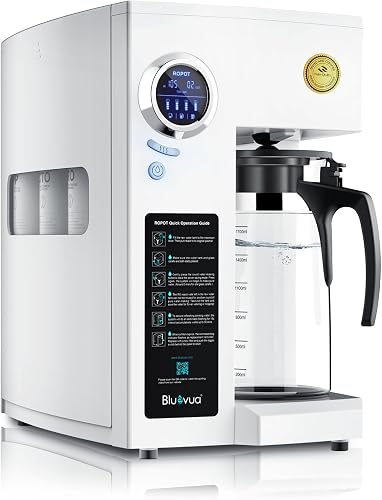
If you want a totally independent permeate sample to compare against your G3 P600, a countertop unit like the Bluevua RO100ROPOT Countertop Reverse Osmosis Water Filter System can fill that role. Same feed water, two separate membranes, two TDS readings — handy when you're trying to isolate whether the G3 P600 is misreading or whether your tap chemistry is unusual.
APEC ROES-50 — Classic Tank Benchmark
For a baseline of what a no-frills tank RO produces, the APEC Water ROES-50 5-Stage Under Sink Reverse Osmosis System is a 50 GPD NSF-certified system with proven membrane chemistry. Comparing its permeate to your G3 P600 permeate (both measured with the same handheld meter) is a useful sanity check.
Common Mistakes That Skew TDS Testing
- Using a plastic cup. Cheap plastic releases trace ions and adds 5–15 ppm to readings. Always use glass.
- Cold water samples. TDS meters auto-compensate to 25°C, but the algorithm assumes near-room temperature. Below 15°C, readings can drift 10%.
- Reading too fast. Both the G3 P600 sensor and your handheld need 15–30 seconds to stabilize.
- Not flushing the faucet. The first 200 mL out of any RO faucet is stagnant and reads high.
- Stale calibration solution. Once opened, calibration packets are good for 6 months. Old solution gives bad calibration, which gives bad comparisons.
- Testing right after a filter change. Give the system 24 hours and 5+ gallons of throughput before benchmarking.
When the Numbers Don't Agree
If your handheld reads dramatically higher than the G3 P600 display, the most likely cause is scale buildup on the inline sensor's conductivity probe. Waterdrop's troubleshooting flow recommends running the system in flush mode (held button sequence varies by firmware revision; check the manual). If a flush doesn't recover the reading, the sensor module is replaceable as a service part.
If your handheld reads lower than the G3 P600 display, your handheld is probably out of calibration or the probe is fouled. Re-calibrate against 342 ppm solution and retest.
If both readings agree but the permeate TDS is above 50 ppm with a feed TDS under 400 ppm, the membrane is the problem — not the sensor. Replace the RO cartridge.
How Often Should You Run This Check?
Quarterly is plenty for most households. Mark it on your calendar to coincide with the season change — that's also when municipal water utilities often shift treatment chemistry, so you'll catch any feed-side surprises at the same time. If you're on well water, monthly testing is more appropriate because well chemistry shifts faster.
For deeper background on system upkeep, see our guide to maintaining a reverse osmosis system and the related walkthrough on how to maintain a reverse osmosis water filter. If you're newer to RO ownership, the key features of reverse osmosis water filters overview explains what each stage actually does.
Frequently Asked Questions
What is a normal TDS reading for the Waterdrop G3 P600?
With feed water in the 150–400 ppm range, the G3 P600 typically delivers permeate at 5–25 ppm. Higher feed TDS will result in slightly higher permeate TDS, but the rejection rate should stay above 90% for a healthy membrane. If your permeate exceeds 50 ppm consistently, the membrane needs attention regardless of what the on-faucet sensor displays.
Why does my handheld TDS meter read higher than the Waterdrop G3 P600 display?
The most common cause is sensor scale buildup. Conductivity probes accumulate mineral deposits over time, which insulates the electrodes and produces artificially low readings. A flush cycle often resolves it. The second most common cause is an uncalibrated handheld meter — always recalibrate before drawing conclusions.
Can I use a cheap Amazon TDS meter to test my G3 P600?
Yes, with caveats. Sub-$15 TDS pens are accurate to roughly ±2% when freshly calibrated, which is fine for a quick health check. For diagnostic work or warranty disputes, invest in an Apera or HoneForest meter with documented ATC (automatic temperature compensation) and traceable calibration solution.
Does the G3 P600 LED faucet show the same TDS as the membrane outlet?
Effectively, yes. The sensor sits after the post-carbon filter and before the faucet, so the LED reflects what comes out of the spout. There's a tiny lag of a few seconds between sensor reading and LED color change, which is why you should wait 15+ seconds with the water running before logging a number.
How accurate is the Waterdrop G3 P600 TDS sensor out of the box?
Independent user testing places factory accuracy at ±5 ppm in the 0–100 ppm range, which is excellent for an inline sensor. Drift over the first 12 months is typically under 10 ppm. After that, a quarterly handheld cross-check is the best way to catch slow degradation before it becomes a water quality issue.
Should I worry if my G3 P600 permeate TDS is 0 ppm?
Zero is uncommon and usually means the sensor is reading below its calibrated floor, not that the water is literally pure. Many handheld meters round anything under 3 ppm to 0. As long as your handheld confirms a value under 10 ppm, the system is working as designed.
How does the G3 P600 compare to other smart-faucet RO systems for TDS monitoring?
The G3 P600's sensor is on par with the higher-capacity G3P800 and the VIOMI V8 Pro. Tank-based systems like the iSpring RCC7AK and APEC ROES-50 don't include built-in TDS monitoring, which is why handheld testing is your only option on those units. If real-time TDS feedback matters to you, stick with the tankless smart-faucet category.
Key Takeaways
- Choosing the right test Waterdrop G3 P600 TDS accuracy handheld meter means matching the key features to your specific needs and budget
- Read real customer reviews and check the return policy before you commit
- Also covers: Waterdrop G3 P600 TDS meter calibration
- Also covers: verify G3 P600 TDS reading
- Also covers: Waterdrop built-in TDS accuracy check
- Compare value across models — the priciest option is not always the best fit