At-a-glance specification comparison
| Model | Rated output | Published flow | Efficiency / pressure signal | Installation signal |
|---|---|---|---|---|
| iSpring RO1000-ORB | 1,000 GPD | Up to 0.7 GPM | Automatic rinse listed after 24 hours of non-use | Under-sink, click-and-lock filter language |
| iSpring RO1000-BN | 1,000 GPD | Up to 0.7 GPM | Smart panel and filter-life monitor listed | Under-sink, brushed-nickel variant |
| iSpring CRO1000 | 1,000 GPD | 0.7 GPM | Optional PMP1000 below 80 psi; 20 x 4.5 inch filters | Freestanding commercial-style frame |
| LoopDrops CR1000 | 1,000 GPD | Up to 0.69 GPM | 3:1 pure-to-drain; 9-layer filtration | Approximately 6.75 x 17.88 x 12.5 inches |
| Frizzlife PD1200 | 1,200 GPD | Listing emphasizes high-speed dispensing | 3:1 pure-to-drain; 11-stage filtration | Under-sink smart-faucet system |
As an Amazon Associate I earn from qualifying purchases.
By Rofiltered Editorial Team — specification and installation analysis.
Quick answer: The right high-output tankless reverse-osmosis system depends on where it will live, how much water you dispense, and whether you need efficiency, pressure monitoring, or compact under-sink hardware. A larger GPD label is not automatically the better fit.
This guide compares five current product listings using the specifications captured from each listing and a practical installation lens. The product cards below link to the exact listing used for each comparison.
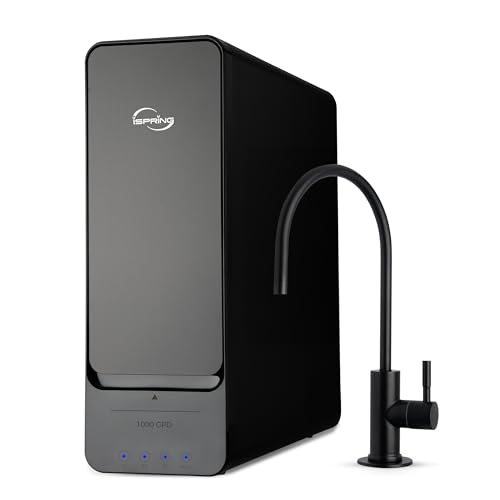
- [Fast and Effective Water Filtration] The iSpring RO1000 reverse osmosis water filtration system produces up to 1000 gallons of filtered water daily. With an impressive flow rate
- [Advanced Filtration Technology] The iSpring RO1000 under-sink reverse osmosis water filter boasts advanced filtration technology that effectively reduces Total Dissolved Solids
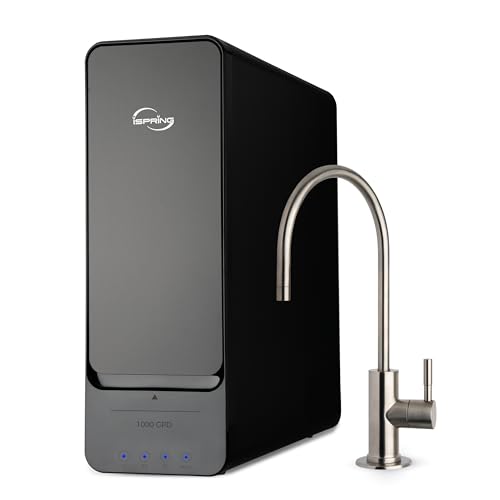
- [Fast and Effective Water Filtration] The iSpring RO1000 reverse osmosis water filtration system produces up to 1000 gallons of filtered water daily. With an impressive flow rate
- [Advanced Filtration Technology] The iSpring RO1000 under-sink reverse osmosis water filter boasts advanced filtration technology that effectively reduces Total Dissolved Solids
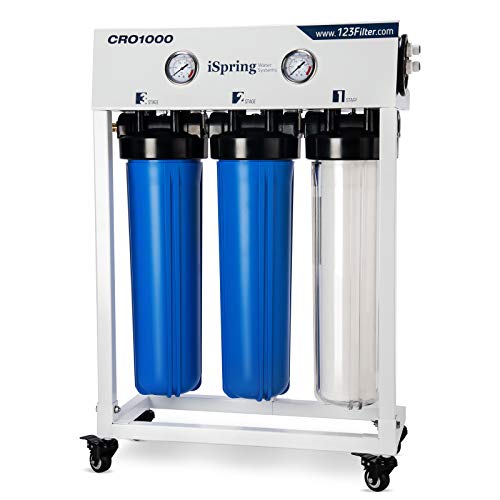
- HIGH-EFFICIENCY COMMERCIAL-SIZE RO MEMBRANE - Removes up to 99% of over 1,000 contaminants, including lead, chlorine, fluoride, arsenic, asbestos, calcium, sodium, and more. Its
- 4-STAGE WATER FILTRATION - Equipped with commercial-grade filters: a 20” x 4.5” PP Sediment Filter with a transparent housing for easy monitoring, two 20” x 4.5” Carbon Block
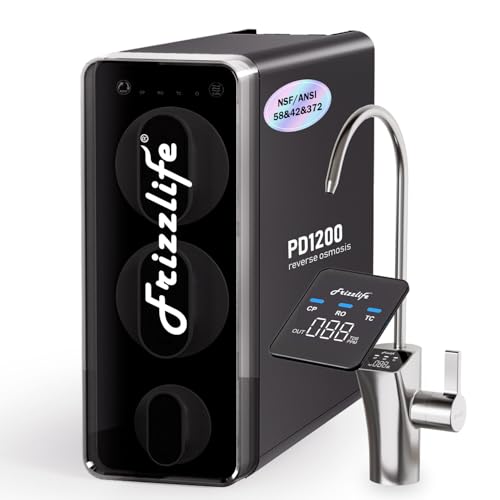
- [1200GPD Super Fast Water Flow] PD1200 RO system is capable of producing 1200 gallons of RO water per day. The upgraded high speed reverse osmosis water filter can serve the daily
- [3:1 Pure to Drain Ratio] Thanks to the innovative water saving technology, the PD1200
Quick verdict: choose by installation and priorities
- Commercial-style installation: Use a freestanding setup only when the available space and service access support it.
- Compact under-sink installation: Compare the two RO1000 listings when cabinet space and monitoring matter.
- Water-efficiency comparison: Use the published efficiency figures as a starting point, then confirm the current listing.
- Higher rated capacity: The five rows are not interchangeable; compare the capacity and installation details that match your use.
Installation and buying matrix
| Model | Pure-to-drain signal | Filter signal | Pressure signal | Price and maintenance check |
|---|---|---|---|---|
| iSpring RO1000-ORB | Not stated in the captured listing | Click-and-lock filter language | Confirm in the current manual | Check the current offer and replacement schedule |
| iSpring RO1000-BN | Not stated in the captured listing | Click-and-lock filter language | Confirm in the current manual | Check the current offer and replacement schedule |
| iSpring CRO1000 | Not stated in the captured listing | Commercial-size 20 x 4.5 filters | PMP1000 recommended below 80 psi | Check the current offer and stage intervals |
| LoopDrops CR1000 | 3:1 in the captured listing | 9-layer filtration | Confirm in the current manual | Check the current offer and filter-life statement |
| Frizzlife PD1200 | 3:1 in the captured listing | 11-stage filtration | Confirm in the current manual | Check the current offer and replacement schedule |
How to read it: These are listing-reported figures, not independent lab measurements. “Up to” describes a seller’s stated ceiling; actual output depends on feed pressure, water temperature, plumbing, and condition.
The five current product listings
Compared models and current listings
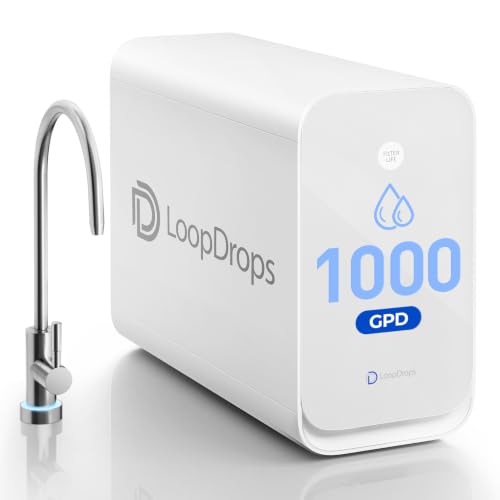
LoopDrops CR1000 Tankless Reverse Osmosis System, 1000 GPD RO Water Filter
iSpring RO1000-ORB: compact output with automatic rinse language
The iSpring RO1000-ORB listing lists up to 1000 gallons of filtered water daily and up to 0.7 gallons per minute. The RO1000-ORB listing states: If this system is not used after 24 hours, it will rinse the RO MEMBRANE for 18 seconds. That combination makes it a sensible listing to examine when a household or office wants quick dispensing without a storage tank.
Check the cabinet dimensions, feed connection, drain connection, electrical requirements, and included faucet before ordering. A headline number is only one input to an installation decision.
iSpring RO1000-BN: a separate finish variant to verify
The iSpring RO1000-BN listing lists up to 1000 gallons of filtered water daily and up to 0.7 gallons per minute. The RO1000-BN listing includes a smart panel and a filter-life monitor. Compare the live configuration rather than assuming that a finish variant includes exactly the same accessories or replacement parts.
iSpring CRO1000: the commercial-style option
The iSpring CRO1000 listing lists 1,000 GPD and 0.7 GPM. The CRO1000 listing states the optional PMP1000 booster pump below 80 psi. The CRO1000 listing lists commercial-size 20 x 4.5 filters.
For a freestanding setup, plan the water feed, drain route, and service access before treating it like an ordinary under-sink installation.
LoopDrops CR1000: efficiency and footprint
The LoopDrops CR1000 listing lists up to 0.69 GPM and a 3:1 pure-to-drain ratio. The LoopDrops listing lists an under-sink unit that measures approximately 6.75 in W, 17.88 in D, and 12.5 in H.
Those details make this listing useful for an efficiency-and-footprint comparison. Confirm the current dimensions and connection instructions against the live listing before cutting cabinet panels or routing tubing.
Frizzlife PD1200: the higher-capacity comparison
The Frizzlife PD1200 listing lists 1200 gallons per day and a 3:1 pure-to-drain ratio. The PD1200 listing lists 11-stage filtration and a smart faucet with real-time TDS monitoring.
The final comparison row is a different reference point, but its headline figure alone should not decide the purchase. Before purchasing, compare space, sound, electrical setup, replacement-part availability, and certification language in the current listing.
What matters beyond the GPD label
Who actually needs this much capacity?
A high-output tankless RO system makes the most sense when dispensing speed, repeated pitcher filling, office use, food preparation, or light commercial demand matters. For ordinary drinking and cooking, a smaller system may be easier to install and maintain. Calculate demand first, then compare the installation constraints.
When does a booster pump matter?
The CRO1000 listing specifically recommends the optional PMP1000 booster pump below 80 psi and describes an 80–130 psi working range. Treat that as a product-specific installation check, not a universal rule for every system on this page. Measure or confirm incoming pressure and follow the exact manual.
What is TDS creep and why should I care?
When an RO membrane sits idle, the first water after startup can differ from the water produced after the system stabilizes. Automatic rinse behavior may help manage standing water, but the listing language is not a substitute for a water-quality measurement. If first-draw quality matters, ask the manufacturer how its flush cycle works and how it should be configured.
How should I compare maintenance?
Look at filter format, service intervals, access space, and whether replacement cartridges are easy to source. Treat interval and filter-life statements as planning information and verify the current manual.
Under-sink space check
Some tankless systems are designed for under-sink use; one compared listing describes a freestanding commercial-style frame instead. Check width, depth, height, pump noise, power, tubing route, and drain access. A design that fits on paper can still be impractical if the service space is too tight.
Watch before installation
This iSpring installation guide demonstrates the kind of work involved, including feed-water connection, faucet installation, startup, and filter replacement. It is a manufacturer video, not independent testing; use the manual for the exact model and configuration.

What the EPA says about point-of-use RO
The U.S. Environmental Protection Agency explains that point-of-use reverse osmosis treats water at one fixture and produces both treated water and a reject stream. EPA WaterSense guidance is a useful starting point for understanding efficiency questions and deciding whether RO addresses the problem you actually have.
Read EPA WaterSense guidance on point-of-use reverse osmosis systems
Questions to answer before ordering
Is 1,000 GPD automatically better?
No. Use published capacity as one comparison point, then match demand, pressure, space, maintenance access, and the water issue you are trying to solve.
Should I choose by contaminant count?
No single headline count answers every water-quality question. Identify the contaminant, review your water report or test results, and confirm that the documentation addresses that specific concern.
Are these independent product tests?
No. This is a specification and installation analysis based on the dated product listings, the manufacturer installation video, and EPA guidance. Rofiltered did not purchase, operate, measure, or laboratory-test the systems described here.
What can change after publication?
Prices, availability, images, included accessories, specifications, and seller terms can change. Recheck the live listing and the manufacturer manual immediately before buying or installing.
Related guides
- What Contaminants Does Reverse Osmosis Remove?
- How to Lower APEC ROES-50 Wastewater Ratio for Drought Zones
- Best Reverse Osmosis System for Mobile Detailing
- How Rofiltered Researches Products
Methodology and limitations
The comparison uses five current product observations bound to the exact ASINs shown in the cards, plus the manufacturer video and EPA WaterSense guidance. Product-specific statements are limited to the captured listing evidence. The editorial judgments are installation-fit guidance, not lab rankings. Verify the current listing, certification scope, pressure requirements, replacement parts, and manual before purchase.