As an Amazon Associate this site earns from qualifying purchases.
For a reverse osmosis system tiny home off grid solar setup, the best picks share three traits: zero or near-zero electricity draw, a compact footprint that fits a 5–10 sq ft kitchen, and a tight pure-to-drain ratio so you do not waste precious tank water. Non-electric under-sink units like the APEC ROES-50 and Home Master TMAFC-ERP run purely on supply pressure, while portable countertop systems like the Bluevua RO100ROPOT and AquaTru Classic pull a brief burst of power only while filling. Below are five units that actually fit solar-and-cistern living in 2026.
Tiny homes running on off-grid solar present a unique water-purification puzzle. Your battery bank cannot comfortably support a constant 100-watt RO booster pump idling all day, your cistern may only hold 40–80 gallons, and every gallon dumped to the drain is a gallon you have to haul, pump, or catch from the roof again. That rules out a lot of flashy tankless 800 GPD systems sold for suburban homes — they assume unlimited city pressure and a sewer line. Instead, you want a passive, tank-based under-sink unit, or a low-draw countertop unit that only runs while filling.
The best reverse osmosis system tiny home off grid solar for your situation depends on how you plan to use it and where.
What to look for in a reverse osmosis system for an off-grid solar tiny home
Before comparing units, get clear on the four constraints that matter most in a solar tiny home.
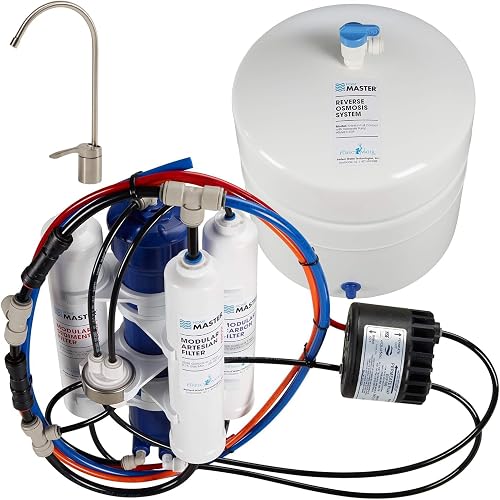
- Innovative RO System Design - Home Master Artesian Full Contact addresses common issues of canister and tankless systems with a unique, efficient design
- Enhanced Mineral Water - Features a patented remineralization system that adds essential minerals such as calcium and magnesium twice during the purification process, ensuring
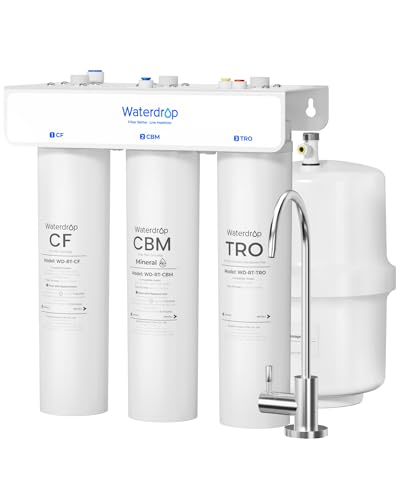
- [220 Gallons Per Day for More Water] This reverse osmosis system produces up to 220 gallons of purified water per day, delivering significantly more water than traditional
- [Faster Installation, Less Hassle] Designed with simplified water lines, this Undersink RO system can be installed in as little as 30 minutes. Compared to traditional multi-line
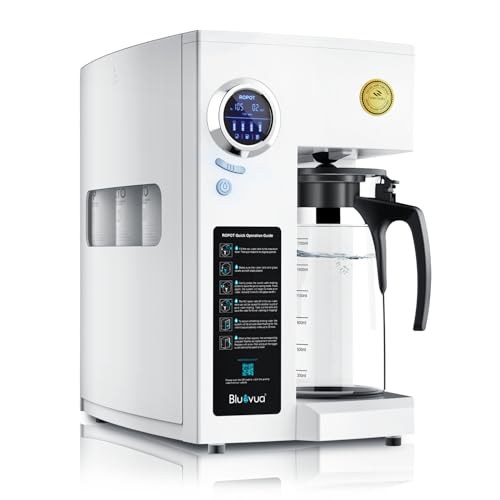
- COUNTERTOP FILTRATION + PREMIUM-QUALITY CARAFE: No plumbing or installation is required for this RO system. Simply plug this portable piece of tech into any power source, and
- POWER SAVING + WATER SAVING: The water system automatically enters a power-saving standby mode when not in use to reduce power consumption. Filters are also designed to help save
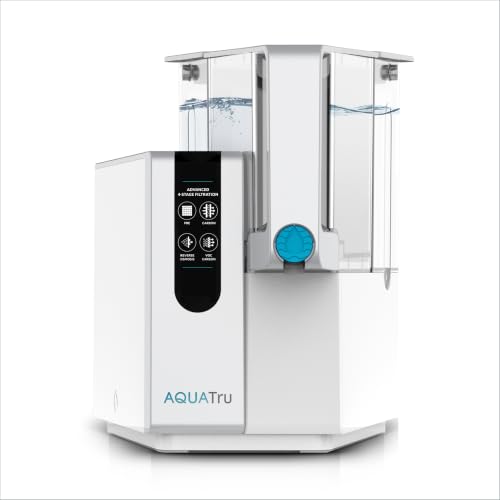
- Is your water safe to drink? Studies continue to pour in regarding Toxins, Hormones, Microplastics, Cancer-linked contaminants, known Carcinogens and other toxins discovered in
- Certified NSF/ANSI Standards - Tested & certified by IAPMO to meet NSF/ANSI standards 41, 53, 58, 401, and P473 for water filters, which include 84 contaminants - even
Comparison: best RO systems for tiny homes on solar
| System | Type | Power needed | Pure:Drain | Output | Best for |
|---|---|---|---|---|---|
| APEC ROES-50 | Under-sink, tank | None | ~1:3 | 50 GPD | Best non-electric overall |
| Home Master TMAFC-ERP | Under-sink, tank | None (permeate pump) | 1:1 | 75 GPD | Lowest water waste |
| Bluevua RO100ROPOT | Countertop | ~70 W while filling | ~1:1 | ~75 GPD batch | Renters and movers |
| AquaTru Classic | Countertop | ~90 W while filling | ~1:4 | Batch tank | Certified contaminant removal |
| Waterdrop T3-T | Under-sink, tank | None | 2:1 | 220 GPD | Higher flow, no plug |
Power draw. Traditional under-sink RO systems with a storage tank need no electricity at all — they push permeate through the membrane using your incoming water pressure (50–80 psi). That is gold for off-grid living. Tankless units (Waterdrop G3, VIOMI V8, Frizzlife PD600) require a 100–120 W booster pump that runs the entire time you have the faucet open. On a 400–800 W solar array, that is a meaningful load, especially on cloudy mornings.
Pure-to-drain ratio. Standard 50 GPD systems waste roughly 3–4 gallons for every gallon of permeate produced. That is fine when your drain runs to a sewer; it is brutal when you have to truck water in. Look for systems advertised at 1:1 or 2:1 ratios — the Home Master TMAFC-ERP is one of the only true 1:1 designs on the market.
Footprint. Tiny home cabinets are tight. A traditional 5-stage system with a 3.2-gallon tank needs about 16 inches of horizontal space plus tank clearance. Countertop units sit on the counter and require no plumbing modifications — ideal if your tiny home plumbing is PEX with quick-connects you do not want to cut into.
Feed water source. Cisterns, rain catchment, and shallow wells often carry sediment and bacterial risk. A UV stage or strong pre-filtration matters more here than in a city-water install. If your source has any biological concern, prioritize systems with optional UV or pair an RO unit with a separate UV polish.
Top reverse osmosis picks for tiny home off-grid solar setups
Best non-electric overall: APEC Water ROES-50
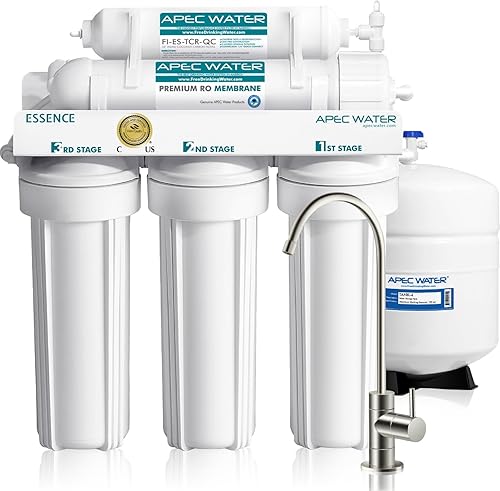
The ROES-50 is the workhorse of the off-grid RO world. It is a five-stage under-sink unit with a 3.2-gallon tank and zero electricity requirement — it runs entirely on your supply pressure. As long as your pump or gravity-fed cistern can deliver 40+ psi, you will get clean drinking water without touching your battery bank. The NSF 58 and 372 certifications are real, the filters are widely available, and at 50 GPD it produces about 25 gallons of usable permeate per day in real-world conditions — far more than a tiny home household drinks. The pure-to-drain ratio is the weak spot at roughly 3:1, so if every gallon counts, look at the Home Master below. APEC Water ROES-50 5-Stage Under Sink Reverse Osmosis System. For a deeper teardown, see our APEC ROES-50 review.
Lowest waste, no power: Home Master TMAFC-ERP Artesian
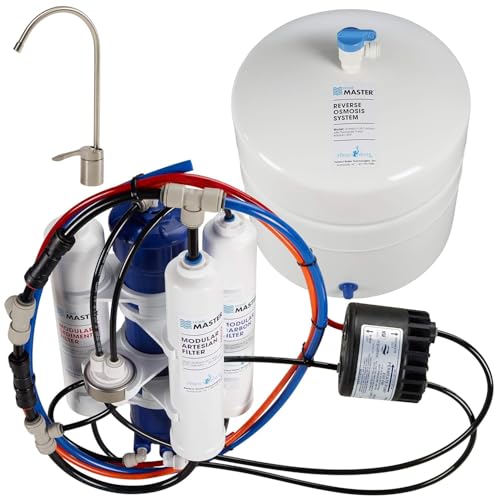
If you are hauling water or running on rain catchment, the Home Master TMAFC-ERP is the most thoughtful unit you can buy. Its built-in non-electric permeate pump uses the pressure differential between the drain line and the storage tank to push permeate faster, which delivers an honest 1:1 waste ratio — roughly four times less water dumped to the drain than a standard RO. It is also a seven-stage system with two-pass alkaline remineralization, which matters because pure RO water is acidic and can leach metals from copper or brass fittings common in older tiny home plumbing. The catalytic carbon also handles chloramines, which RO membranes alone do not remove well. No plug, no batteries, no power management. Home Master TMAFC-ERP Artesian Full Contact Reverse Osmosis System. We also pit this unit against a popular countertop alternative in our Home Master vs AquaTru countertop comparison.
Best portable countertop: Bluevua RO100ROPOT
The Bluevua RO100ROPOT is the go-to for tiny home builders who do not want to cut into PEX or commit to permanent plumbing. It sits on the counter, plugs into a standard outlet, and refills its membrane only when you press the dispense button — so the power draw averages near zero across a day. The remineralization stage adds back calcium and magnesium, the WQA certification covers TDS reduction, and the unit holds purified water in its tank between cycles. For a single occupant or couple, one tank-fill covers a day of drinking and cooking. The brief inrush when the pump kicks on is well within what a small 1000 W inverter can handle. Bluevua RO100ROPOT Countertop Reverse Osmosis Water Filter System.
Best certified countertop: AquaTru Classic
AquaTru Classic is the most independently certified countertop RO on the market, with NSF/ANSI certifications covering 84 contaminants including PFAS, lead, fluoride, and microplastics. For tiny homes drawing from a marginal well or a roadside spring with unknown contamination, that certification ledger matters. It is a true four-stage RO with a batch tank, plugs into any outlet, and the pump runs only during the roughly 12-minute fill cycle. The downside for off-grid use is the higher pure-to-drain ratio — roughly 1:4 — so it is best paired with a greywater catch system you already use to flush a composting toilet or irrigate. AquaTru Classic Countertop Water Purifier.
Best higher-flow no-power option: Waterdrop T3-T
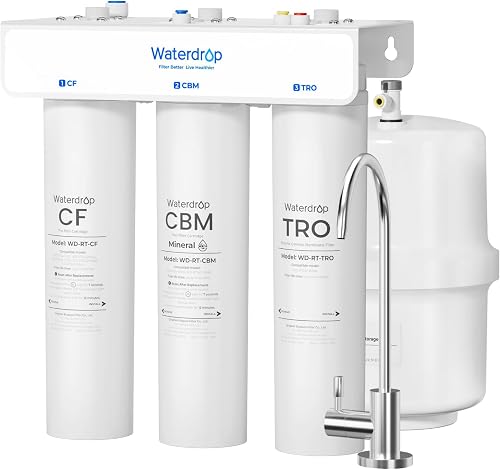
The Waterdrop T3-T is an interesting middle ground: it uses a storage tank, requires no power, runs at a remarkable 220 GPD, and hits a 2:1 pure-to-drain ratio without a booster pump — thanks to a seven-stage design and a higher-permeability membrane. The remineralization stage brings the pH back into the slightly-alkaline zone, and the tank-based design means you get instant flow when you open the tap rather than waiting on a tankless unit to spin up. For a tiny home with two to four occupants drawing from a pressurized cistern, this is a strong upgrade over the basic ROES-50. NSF/ANSI 372 certification covers lead-free materials. Waterdrop T3-T.
How to size a reverse osmosis system for your tiny home solar setup
The math is simpler than it looks. A typical adult drinks 0.5–1 gallon of water per day and uses another 0.5 gallon for cooking and coffee. A two-person tiny home therefore needs 2–3 gallons of permeate daily. A 50 GPD system rated at half its sticker number in real conditions still delivers ~25 gallons — ten times your need. Bigger is not better off-grid; bigger usually means more drain water.
If your cistern is 80 gallons and your input ratio is 3:1 waste, every gallon of drinking water actually consumes 4 gallons of cistern. Switch to a 1:1 system like the Home Master and that same 80 gallons stretches twice as far. Over a month of rainless weather, that is the difference between a water run and staying put.
For pressure, most tiny home water pumps (Shurflo 4008, Flojet) deliver 45–55 psi, which is right at the minimum for an unpumped RO. If your pressure is lower, a system with a non-electric permeate pump (like the Home Master TMAFC-ERP) is essentially mandatory. For low-pressure cisterns under 40 psi, a small Aquatec booster can be added — but at that point you are back to drawing solar watts.
What about whole-house or tankless RO for a tiny home?
Skip it. Whole-house RO units like the iSpring CRO1000 are sized for restaurants and pull 200+ watts continuously. Tankless under-sink units (Waterdrop G3P800, VIOMI V8 Pro, Waterdrop X12) are excellent on city water but defeat the purpose of solar living — they draw 100–120 watts every time the faucet runs, and they cannot store water during sunny hours for nighttime use. Tank-based and batch-countertop designs win for off-grid because they decouple production from consumption.
One exception: if you have a robust solar array with at least 2 kWh of daily surplus, a Waterdrop T3-T paired with a small DC-powered booster pump can give you near-instant high flow. For most tiny home setups, the simpler path wins.
Frequently Asked Questions
Can I run a reverse osmosis system in a tiny home with no electricity at all?
Yes. Traditional tank-based under-sink RO systems like the APEC ROES-50 and Home Master TMAFC-ERP require zero electricity — they use the pressure of your incoming water (40–80 psi) to push permeate through the membrane and into the storage tank. As long as your tiny home water pump or gravity-fed cistern can hit 40 psi, you can purify water without drawing a single watt from your solar array or batteries. This is the single biggest reason traditional RO designs remain popular among off-grid builders despite their higher waste ratios.
How much water does an RO system waste, and does that matter for off-grid living?
Standard 50 GPD systems waste 3–4 gallons per gallon of drinking water. On city water and sewer, this is invisible. With a hauled or cistern-fed tiny home, it is the most important spec in the catalog. A 1:1 system like the Home Master TMAFC-ERP cuts waste by roughly 75 percent compared to a standard ROES-50. Over a month, that can be the difference between one and three water-hauling trips. Read more on the trade-offs of RO filtration.
Will RO water damage my tiny home plumbing or PEX lines?
Pure RO permeate is slightly acidic (pH 5–6) and aggressive toward copper, brass, and galvanized steel — it will not harm PEX or modern stainless fittings. If your tiny home uses any copper or brass fittings downstream of the RO faucet, choose a system with remineralization that brings pH back to neutral, such as the iSpring RCC7AK, Home Master TMAFC-ERP, or Waterdrop T3-T. Remineralized water also tastes noticeably better and is gentler on dental enamel.
Is a countertop RO system better than an under-sink unit for a tiny home?
It depends on your build. Countertop units like the Bluevua RO100ROPOT and AquaTru Classic require no plumbing and can move with you — ideal if you rent your tiny home pad or plan a future build-out. Under-sink units save counter space, which is precious in a tiny home, and deliver water at the tap rather than from a separate dispenser. If your kitchen counter is 18–24 inches deep, the under-sink path usually wins on livability. For a deeper comparison, see our guide to the best countertop RO filters.
What is the minimum solar setup needed to run a tankless RO system?
A tankless RO with a 100 W pump that runs five minutes per day draws roughly 8 Wh — trivial. But real-world households open the faucet far more, and the pump pulls full wattage the whole time. Budget 200–300 Wh per day for a small household, plus inverter inefficiency. That requires at least a 400 W solar array and roughly 1–2 kWh of battery storage to weather cloudy days. If you are below that threshold, stick with a non-electric tank system or a batch countertop unit that you run only at midday when the panels are producing.
Can I use rainwater or cistern water as the source for an RO system?
Yes, with caveats. RO membranes do not care about TDS source, but they hate sediment and biofilm. If your rainwater is collected from a roof, add a 5-micron sediment pre-filter and ideally a UV stage upstream of the RO. Models like the iSpring RCC7AK-UV or SimPure T1-400UV bundle UV inline, which kills bacteria the RO membrane technically should also block but you should not rely on alone. Clean the cistern annually and replace sediment pre-filters every 3–6 months on rain catchment, which is harder on filters than city water.
How often do RO filters need replacement in an off-grid tiny home?
Pre-filters (sediment and carbon) every 6–12 months, the RO membrane every 2–3 years, and post-filters annually. Cistern and well sources foul filters faster than city water, so plan on the shorter end. Stock at least one full replacement set on hand, especially if you are remote — a clogged sediment filter will cripple your output long before the membrane itself fails. See our guide on how to maintain a reverse osmosis water filter for the full service schedule.
Key Takeaways
- Choosing the right reverse osmosis system tiny home off grid solar means matching the key features to your specific needs and budget
- Read real customer reviews and check the return policy before you commit
- Also covers: low power RO system for off grid living
- Also covers: solar compatible reverse osmosis filter
- Also covers: tiny house RO water filtration
- Compare value across models — the priciest option is not always the best fit