As an Amazon Associate this site earns from qualifying purchases.
If your Home Master TMAFC-ERP permeate pump clicking noise won't stop—rapid tick-tick-tick that keeps looping even when nobody is drawing water—the system is stuck in a pressure standoff. The Aquatec ERP-1000 permeate pump cycles each time it stores up enough drain water to push a slug of product water into the tank. When it clicks endlessly, it almost always means the shutoff valve isn't sensing a full tank, the tank itself has lost air pre-charge, or back-pressure from a clogged post-filter is preventing the pump from completing its stroke. The fix is usually a 20-minute job with no special tools.
Below is a complete diagnostic walkthrough, followed by replacement-grade product picks if your TMAFC-ERP is past saving, plus FAQs covering the related noises owners commonly confuse with a true loop.
When shopping for Home Master TMAFC-ERP permeate pump clicking noise, it pays to compare specs, capacity, and real-world runtime before committing.
Why the Permeate Pump Keeps Clicking in a Loop
The ERP-1000 is a non-electric pump driven entirely by the pressure differential between brine (drain) water and permeate (product) water. Each "click" is the pump's internal four-way valve snapping over after one chamber fills. Under normal operation you hear a click every 3–8 seconds while the tank is filling, then silence once the auto shutoff valve (ASOV) closes. A continuous loop means one of four things:
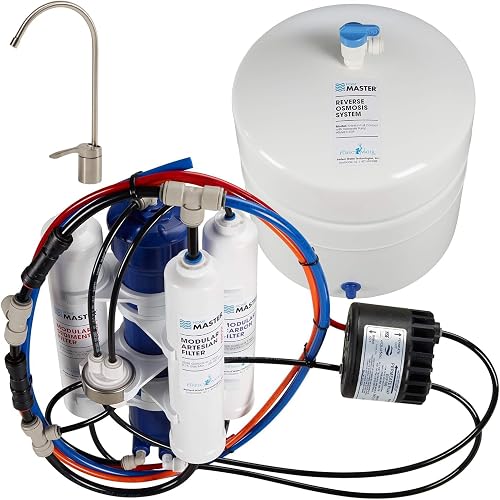
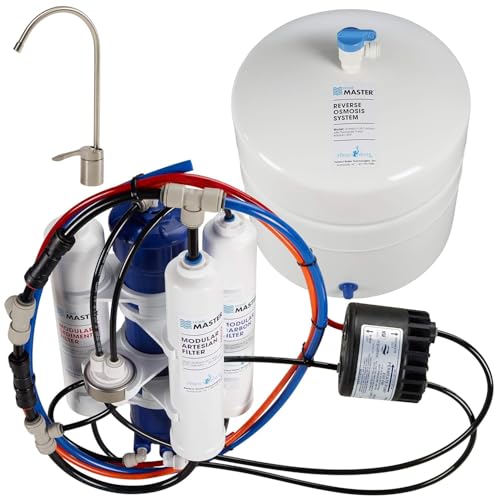
- Innovative RO System Design - Home Master Artesian Full Contact addresses common issues of canister and tankless systems with a unique, efficient design
- Enhanced Mineral Water - Features a patented remineralization system that adds essential minerals such as calcium and magnesium twice during the purification process, ensuring
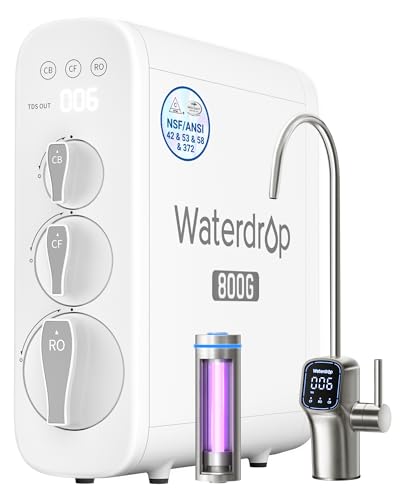
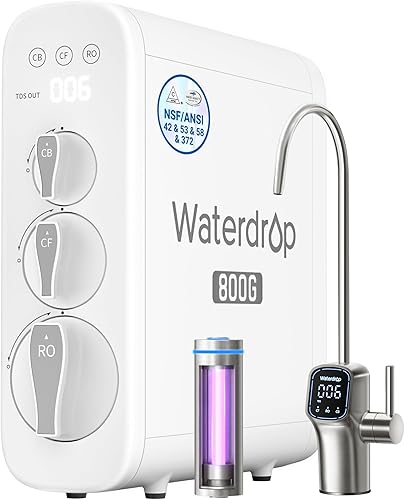
- [10-Stage filtration] Tested by official third-party laboratory (SGS), through 10-stage filtration, G3P800 can effectively reduce PFAS, fluoride, heavy metals like lead, chromium
- [800 GPD high capacity, 3:1 pure to drain ratio] The Waterdrop G3P800 reverse osmosis system offers a higher water capacity (800 gallons per day), thereby meeting demands of a big
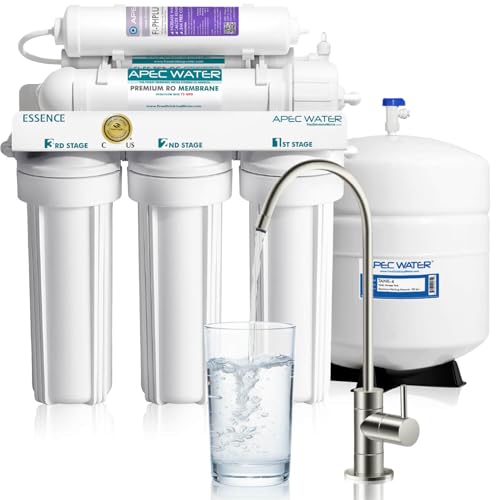
- Supreme quality – designed and engineered with only premium components to ensure high quality filtration and a durable reverse osmosis system for years
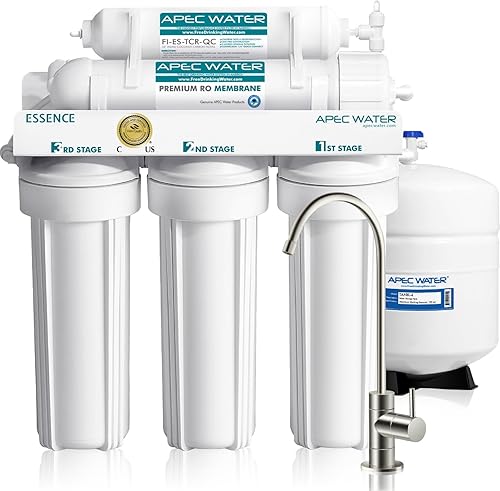
- This 75 GPD 6-stage system ROES-PH75 is guaranteed to remove up to 99% of impurities such as Chlorine, Taste, Odor, VOCs, as well as harmful Fluoride, Arsenic, Lead, Heavy Metals
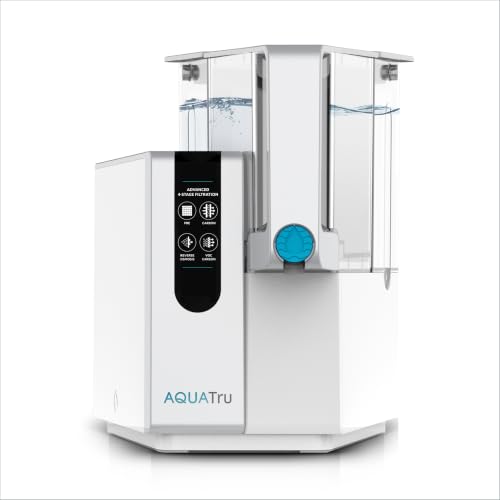
- Is your water safe to drink? Studies continue to pour in regarding Toxins, Hormones, Microplastics, Cancer-linked contaminants, known Carcinogens and other toxins discovered in
- Certified NSF/ANSI Standards - Tested & certified by IAPMO to meet NSF/ANSI standards 41, 53, 58, 401, and P473 for water filters, which include 84 contaminants - even
Comparison: Replacement Systems vs. Your TMAFC-ERP
| System | Architecture | GPD | Waste Ratio | Pump Type | Alkaline? |
|---|---|---|---|---|---|
| Home Master TMAFC-ERP | Tank + permeate pump | ~75 | 1:1 | Aquatec ERP-1000 (non-electric) | Yes (2-pass Full Contact) |
| APEC ROES-PH75 | Tank, no pump | 75 | 3:1 | None | Yes (calcium) |
| Waterdrop G3P800 | Tankless, electric | 800 | 3:1 | Internal booster (no clicking) | No (add-on available) |
| AquaTru Classic | Countertop, electric | ~12 GPH | 4:1 | Internal pump | No |
| APEC ROES-50 | Tank, no pump | 50 | 3:1 | None | No |
- Tank bladder has lost air pre-charge — the most common cause. The pump never sees back-pressure rise high enough to trip the ASOV.
- Faulty or stuck auto shutoff valve — the ASOV isn't closing even though the tank is full.
- Internal leak past the check valve — product water bleeds backward, so the system never reaches shutoff pressure.
- Clogged post-carbon filter or kinked tank line — pump stalls mid-stroke and ticks slowly without progressing.
The clicking itself isn't damaging the pump short-term, but a system trapped in a loop is wasting drain water 24/7 and may signal a leak somewhere in the loop.
Step 1: Confirm the Loop Is Actually a Problem
Open the RO faucet and let the tank drain fully (you'll hear flow slow to a trickle, then the pump should start clicking steadily). Close the faucet. A healthy TMAFC-ERP will click for roughly 4–8 minutes refilling a 3-gallon tank, then go silent within 30 seconds of the tank reaching ~2/3 of incoming line pressure. If yours is still ticking 15+ minutes after the faucet closes, you have a true loop.
Step 2: Check Tank Air Pre-Charge (Solves ~60% of Cases)
With the tank empty (faucet open until trickle), close the blue ball valve on top of the tank. Find the Schrader valve under the blue plastic cap on the side of the tank. Press a tire gauge against it. You should read 6–8 PSI. If it reads 0–3 PSI, the bladder has lost pressure. Add air with a bike pump in short bursts until you hit 7 PSI, recheck, and reopen the tank valve. If the gauge reads water instead of air coming out of the Schrader valve, the bladder is ruptured and the tank needs replacement.
Step 3: Test the Auto Shutoff Valve (ASOV)
The ASOV is the small white block with four push-fit ports near the membrane housing. With the tank full and faucet closed, the pump should be silent. Disconnect the yellow tank line at the ASOV and place it in a cup. If water keeps flowing into the cup, the ASOV has failed open. Home Master sells the replacement valve as part #ISO; install with the arrows pointing in the correct flow direction or the loop will continue.
Step 4: Inspect the Check Valve at the Membrane
The check valve sits in the elbow on the product-water side of the membrane housing. A failed check valve lets product water back-flow into the membrane, which the permeate pump reads as "tank not full yet," triggering more cycling. Disconnect the elbow, blow gently into the membrane side—you should feel resistance. If air passes freely, replace the check valve.
Step 5: Replace Aging Filters and Membrane
A loaded post-carbon (the in-line filter between tank and faucet) creates back-pressure that confuses the ERP-1000. If your filters are past their service interval—12 months for sediment and carbon blocks, 3–5 years for the membrane—the clicking will not stop until they're swapped. Get more guidance at our RO maintenance guide.
When to Replace the Whole System
If you've reset the ASOV, recharged the tank, swapped the check valve, and the ERP-1000 still loops—or if the pump itself is hissing air, leaking water from its case, or refusing to start under low feed pressure—the unit is at end-of-life. Home Master rates the ERP-1000 for roughly 8–10 years of residential use; if yours is older, replacement is more economical than parts-chasing.
Replacement Picks If Your TMAFC-ERP Is Done
Direct Replacement: Home Master TMAFC-ERP Artesian Full Contact
The simplest fix if you love the Full Contact alkaline remineralization and the 1:1 waste ratio is to replace with the same model. The TMAFC-ERP's 7-stage design, modular filter housings, and 4.5-second fill rate stay best-in-class, and you reuse your existing under-sink space. Home Master TMAFC-ERP Artesian Full Contact Reverse Osmosis System.
Alkaline Upgrade with Booster Pump: APEC ROES-PH75
If your incoming pressure is below 50 PSI (a frequent reason the ERP-1000 struggles), the APEC ROES-PH75 brings calcium-based alkaline remineralization at 75 GPD without the noise complexity of an aging permeate pump. Lifetime US support and bigger filter housings make it a low-drama replacement. APEC Water ROES-PH75. Compare directly in our TMAFC-ERP vs. APEC ROES-PH75 head-to-head.
Tankless Path: Waterdrop G3P800
A tankless RO system eliminates the entire pressure-loop architecture that causes permeate pump clicks. The G3P800 runs at 800 GPD with a 3:1 pure-to-drain ratio, NSF/ANSI 42/53/58/372 certifications, and on-board electronics that signal filter life via a smart faucet—no ASOV, no Schrader valve, no clicking. Waterdrop G3P800 Reverse Osmosis System.
Countertop Backup: AquaTru Classic
If you need water today while you troubleshoot, the AquaTru Classic is a four-stage countertop RO that drops on a counter and runs on a power outlet—no plumbing, no tank pressure to manage. Useful as a permanent secondary, too. AquaTru Classic Countertop Water Purifier. Read our TMAFC vs. AquaTru comparison.
Under-Sink Budget Pick: APEC ROES-50
For a simple non-pumped under-sink replacement with a strong reliability record, the Essence ROES-50 ships at 50 GPD with NSF 372/58 certifications and zero electronics. APEC Water ROES-50 5-Stage Under Sink Reverse Osmosis System.
Preventing the Loop From Coming Back
Once you've fixed a looping Home Master TMAFC-ERP permeate pump clicking noise, three habits keep it quiet:
- Check tank pre-charge every 6 months when the tank is empty—takes 60 seconds.
- Swap sediment and carbon stages annually on schedule; don't stretch them.
- If your incoming pressure runs under 40 PSI, install a feed-line pressure gauge so you can spot drops before the pump starts cycling.
For more on system care, see our overview of why RO filtration is worth the upkeep.
Frequently Asked Questions
How often should a Home Master TMAFC-ERP permeate pump click normally?
During an active fill cycle, a healthy ERP-1000 clicks every 3–8 seconds. Total fill from empty to full on a 3-gallon tank takes 4–8 minutes. Once the tank is full and the ASOV closes, the pump should be completely silent within 30 seconds. Anything beyond that—especially continuous clicking with no faucet draw—is the looping fault discussed above.
Can I just disconnect the permeate pump to stop the noise?
Technically yes, by bypassing it and connecting the drain line directly. But you'll lose the 1:1 waste ratio and drop production by roughly 30%. The TMAFC-ERP is engineered around the permeate pump; running it bypassed turns a premium system into an entry-level one. Fix the loop or replace the system instead.
Why does my permeate pump click only at night?
Night-only clicking usually means municipal pressure drops after midnight when demand falls. Lower feed pressure means the ERP-1000 takes longer to build the differential it needs to complete strokes, and a minor ASOV leak that hides during the day shows up as cycling at night. Install a feed gauge and verify pressure under both conditions.
What pressure should the Home Master TMAFC-ERP tank pre-charge be set to?
Home Master specifies 6–8 PSI with the tank completely empty. Too low and the system loops because it never reaches shutoff pressure; too high and the tank holds less water, also causing rapid cycling. Always set pre-charge with the tank drained, not under load.
Does a clicking permeate pump mean the membrane is failing?
Not directly. A failing membrane changes water quality (rising TDS) but doesn't itself cause looping. However, a heavily fouled membrane creates back-pressure that can prevent the ASOV from sensing tank-full, which mimics looping symptoms. If your TDS has crept up and the pump cycles, replace the membrane first—it's cheaper than chasing valves.
Will a tankless RO system fix all permeate pump clicking problems?
Going tankless eliminates the entire architecture that produces clicking—no tank pre-charge, no ASOV, no pressure differential pump. The trade-off is electric operation and slightly higher cost. For owners tired of acoustic gremlins, units like the Waterdrop G3P800 or VIOMI V6 Pro are a clean break from the problem.
How do I tell ERP-1000 clicking apart from a faucet drip or check valve chatter?
Permeate pump clicks are crisp and mechanical, originating from the small white pump cylinder mounted near the drain line. Check valve chatter is faster (multiple ticks per second) and feels like buzzing in the tubing. A leaky faucet ticks irregularly and you'll see water at the spout. If in doubt, briefly close the feed-water shutoff—if clicking stops within 60 seconds, it's the permeate pump.
Key Takeaways
- Choosing the right Home Master TMAFC-ERP permeate pump clicking noise means matching the key features to your specific needs and budget
- Read real customer reviews and check the return policy before you commit
- Also covers: Home Master TMAFC ERP pump clicking troubleshoot
- Also covers: permeate pump constant cycling Home Master
- Also covers: TMAFC-ERP clicking sound fix
- Compare value across models — the priciest option is not always the best fit