As an Amazon Associate this site earns from qualifying purchases.
To remineralize AquaTru water for coffee at third wave standards, dose the purified output with a calcium-magnesium concentrate (or a single-serve mineral packet) until you land between roughly 70 and 150 ppm total dissolved solids, with a calcium-to-magnesium ratio close to 1:1 and a bicarbonate buffer around 40 mg/L. The AquaTru Classic strips almost everything from your tap supply, which is great for fluoride and PFAS but terrible for flavor extraction. Adding a measured pinch of minerals back unlocks the sweetness, clarity, and acidity that judges look for in SCA cuppings.
Why AquaTru Classic Water Needs Minerals for Coffee
The AquaTru Classic is a four-stage countertop reverse osmosis purifier that removes 84 contaminants and produces water with a TDS reading often below 10 ppm. For drinking, hydration, and baby formula that is ideal. For espresso and pour-over, it is too clean. Coffee extraction depends on minerals — specifically calcium (Ca²⁺) and magnesium (Mg²⁺) cations — to bond with flavor compounds and pull them out of the grounds. Brew with zero-TDS water and you get a hollow, papery cup that tastes under-extracted no matter how long you bloom.
The Specialty Coffee Association's water standard recommends a target TDS of 150 mg/L (acceptable range 75-250), calcium hardness around 68 mg/L as CaCO₃, and total alkalinity around 40 mg/L. Hitting those numbers is precisely why third wave roasters obsess over water recipes. When you remineralize AquaTru water for coffee, you are dialing your countertop unit into that exact window without depending on whatever your municipal supply happens to be that week.
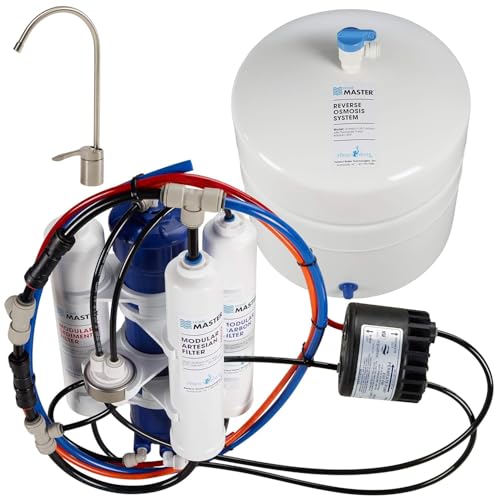
- Innovative RO System Design - Home Master Artesian Full Contact addresses common issues of canister and tankless systems with a unique, efficient design
- Enhanced Mineral Water - Features a patented remineralization system that adds essential minerals such as calcium and magnesium twice during the purification process, ensuring
- Supreme quality – designed and engineered with only premium components to ensure high quality filtration and a durable reverse osmosis system for years
- This 75 GPD 6-stage system ROES-PH75 is guaranteed to remove up to 99% of impurities such as Chlorine, Taste, Odor, VOCs, as well as harmful Fluoride, Arsenic, Lead, Heavy Metals
- PATENTED DESIGN – The top-mounted fastener allows for easy countertop installation entirely from above, eliminating the hassle of tightening the nut from underneath the sink
- MINERAL BOOST – The patent-pending natural mineral AK stage delivers spring water with a balanced, healthy pH and multiple essential minerals
- Is your water safe to drink? Studies continue to pour in regarding Toxins, Hormones, Microplastics, Cancer-linked contaminants, known Carcinogens and other toxins discovered in
- Certified NSF/ANSI Standards - Tested & certified by IAPMO to meet NSF/ANSI standards 41, 53, 58, 401, and P473 for water filters, which include 84 contaminants - even
- COUNTERTOP FILTRATION + PREMIUM-QUALITY CARAFE: No plumbing or installation is required for this RO system. Simply plug this portable piece of tech into any power source, and
- POWER SAVING + WATER SAVING: The water system automatically enters a power-saving standby mode when not in use to reduce power consumption. Filters are also designed to help save
Comparison: Remineralizing RO Systems vs. AquaTru + Mineral Dosing
| System | Format | Remineralization | Output TDS | Best for coffee |
|---|---|---|---|---|
| AquaTru Classic + dosing | Countertop | Manual (drops/packets) | 0-10 ppm user-tuned | Calibration fanatics, V60 brewers |
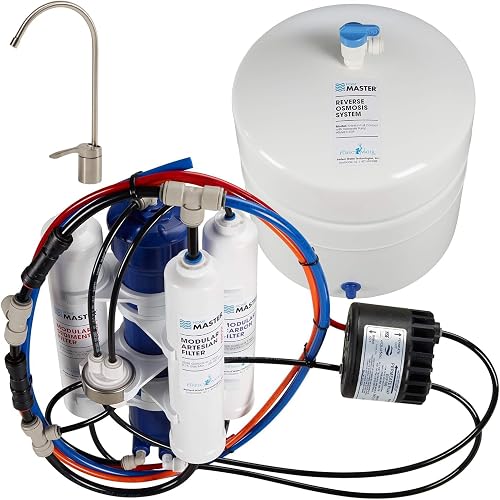
| Home Master TMAFC-ERP | Under sink | Built-in 2-pass calcium | ~40-80 ppm | Daily espresso + drip volume |
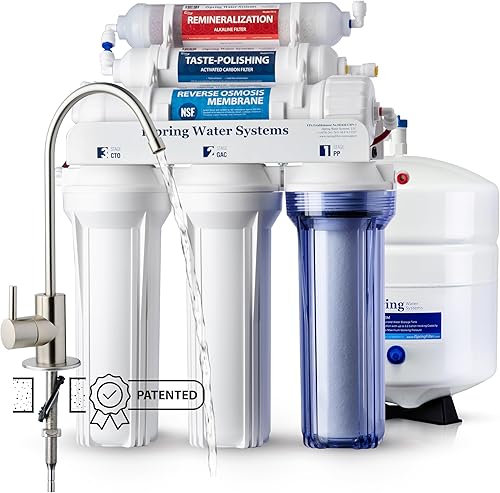
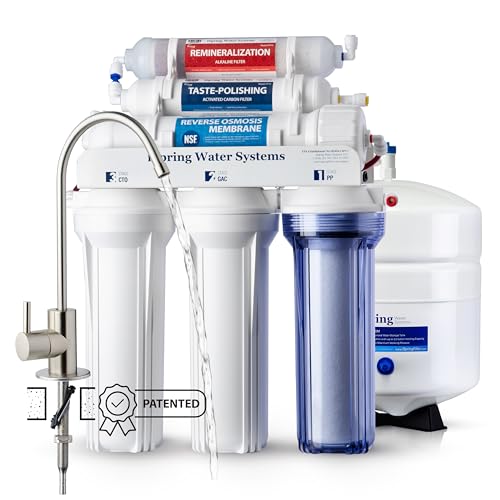
| iSpring RCC7AK | Under sink | Alkaline 6th stage | ~30-70 ppm | Household + cafe-scale brewing |
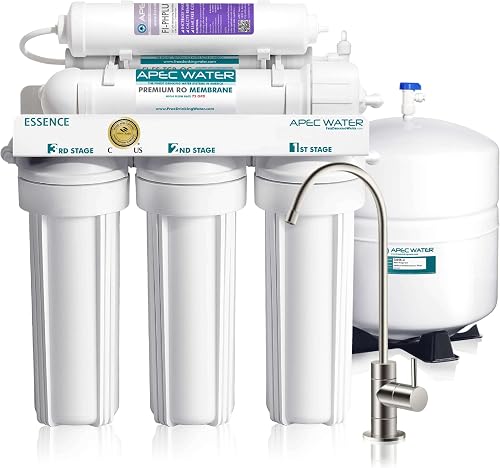
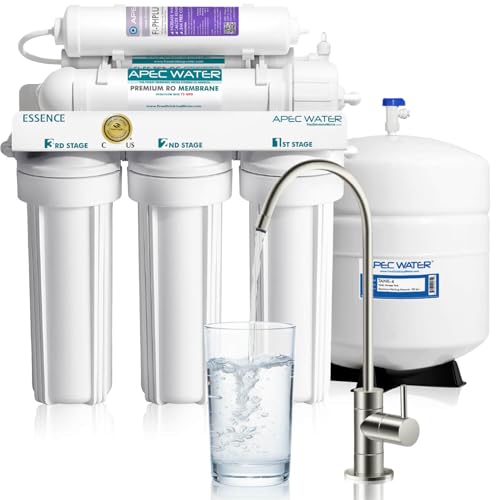
| APEC ROES-PH75 | Under sink | Calcium carbonate post-filter | ~30-60 ppm | Balanced sweet pour-overs |
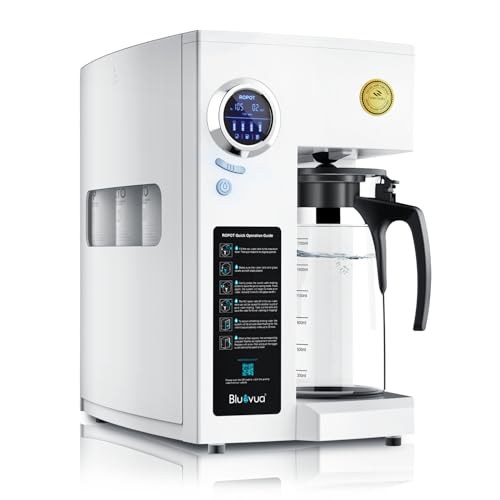
| Bluevua RO100ROPOT | Countertop | Built-in remineralizer | ~25-50 ppm | Renters who want AquaTru-style + minerals |
| Waterdrop T3-T | Under sink + tank | Built-in remineralization | ~30-60 ppm | No-power kitchens, drip-heavy households |
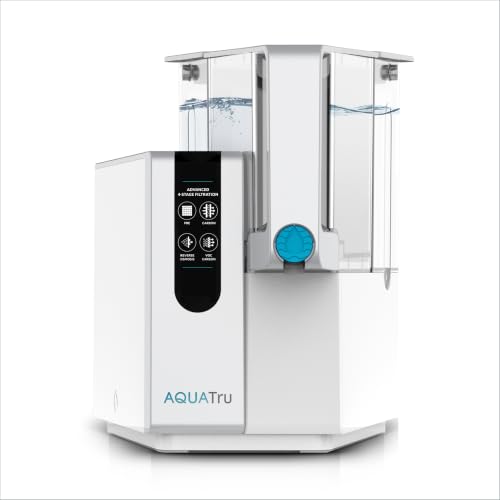
AquaTru Classic Countertop Water Purifier remains the baseline most coffee enthusiasts start with because it requires no plumbing and removes contaminants that wreck flavor (chlorine, chloramine, fluoride) before you ever add minerals back.
Four Practical Ways to Remineralize
1. Liquid mineral concentrate drops
The simplest method: add a calibrated mineral concentrate (potassium bicarbonate, magnesium sulfate, calcium chloride) directly to your AquaTru carafe. Brands like Lotus Coffee Water and Empirical Water sell single-bottle kits with a dropper. You typically add 1-2 mL per liter to reach SCA targets. Pros: extreme repeatability, gallon-scale dosing, and you can adjust calcium-forward (more body) or magnesium-forward (more aromatic clarity) on the fly. Cons: ongoing cost and the bottles eventually expire.
2. Single-serve mineral packets
If you brew one to three pots a day, pre-measured packets (Third Wave Water, Apax Lab) are the lowest-friction approach. Tear, dump into one gallon of AquaTru output, shake, and brew. Espresso, classic light-roast, and dark-roast profiles each have their own packet recipe. Pros: bulletproof consistency, travel-friendly. Cons: roughly $0.75-$1.00 per gallon, and you cannot fine-tune.
3. Blend AquaTru output with tap water
Cheapest method, but only viable if your tap water has a moderate, clean mineral profile (a TDS meter and a Hach or LaMotte hardness test kit make this honest). A common blend ratio is 80% AquaTru purified water to 20% tap, which yields roughly 60-80 ppm TDS in many U.S. cities. The downside is variability — your tap chemistry shifts seasonally — and you re-introduce some of the chlorine taste that AquaTru just stripped out.
4. Upgrade to a remineralizing RO system
If you are brewing several gallons a week, manual dosing gets old fast. An RO system with a post-membrane alkaline cartridge handles the remineralization automatically. This is the approach most cafes take when they install plumbed-in RO under the espresso machine. You give up some calibration precision but gain volume and convenience.
Top Picks for Coffee-Focused Brewers
AquaTru Classic (the baseline)
If you already own one, you are halfway there. The four-stage RO membrane removes the contaminants that ruin coffee flavor at the source (chlorine, chloramine, lead, microplastics), giving you a blank canvas to remineralize. Pair it with a dosing kit and you can match SCA targets within 5 ppm — something no off-the-shelf bottled water reliably does. AquaTru Classic Countertop Water Purifier.
Home Master TMAFC-ERP Artesian Full Contact
For coffee drinkers ready to go under-sink, the Home Master TMAFC-ERP is the cult favorite. Its two-pass remineralization actually adds calcium and magnesium twice — once before the membrane and once after — producing water that tastes round and sweet straight from the faucet without any drops. Fill rate is fast enough to keep up with a busy espresso routine, and the modular cartridges are friendlier to change than most competitors. Home Master TMAFC-ERP Artesian Full Contact Reverse Osmosis System. Compare it directly with your current setup in our Home Master TMAFC vs AquaTru countertop comparison.
iSpring RCC7AK 6-Stage Alkaline RO
The RCC7AK is the value pick. NSF-58 certified, six stages, and the alkaline cartridge meaningfully boosts the post-membrane mineral content for around half the price of the Home Master. It is the system you install if you want SCA-friendly water for a household that brews two pots a day plus an occasional espresso. iSpring RCC7AK 6-Stage Reverse Osmosis System.
APEC ROES-PH75 Alkaline RO
APEC's 75 GPD alkaline system delivers a smoother bicarbonate buffer than most competitors, which third wave brewers like because it tames sharp acidity in lighter Ethiopian roasts. The unit is also one of the easiest to service. APEC Water ROES-PH75.
Bluevua RO100ROPOT Countertop with Remineralization
If you want to stay countertop but get the remineralization built in (no drops, no packets), the Bluevua is the closest direct alternative to AquaTru. Same no-plumbing format, but the mineral cartridge pushes output TDS into the coffee-friendly window automatically. Good for renters and travelers who do not want to manage a dosing routine. Bluevua RO100ROPOT Countertop Reverse Osmosis Water Filter System.
Step-by-Step: Dialing in Your AquaTru for Espresso
Here is the workflow most third wave roasters use when they need to remineralize AquaTru water for coffee in a calibrated way.
- Measure baseline. Run a fresh batch through your AquaTru and use a TDS meter. You should see 0-10 ppm. If you see more, your post-filter is overdue.
- Choose a target. For espresso, aim for 90-110 ppm TDS. For filter and pour-over, 50-80 ppm tends to produce the cleanest acidity. Heavily roasted, chocolate-forward beans like a touch more (120-140 ppm).
- Dose accurately. Use a graduated syringe (1 mL marks) for liquid concentrates, or pre-weighed packets sized to one gallon. Mix into the AquaTru carafe or a separate jug.
- Re-measure. Stir, wait 30 seconds, and TDS-check. Adjust the next batch up or down by 5-10 ppm at a time.
- Cup the result. Brew the same recipe (dose, grind, ratio, temperature) and taste against your previous water. Sweetness should jump first; clarity comes when your magnesium share is right.
Many brewers keep a small notebook tracking TDS, mineral ratio, and tasting notes for each origin. The SCA targets are a starting point, not gospel — Kenyan AAs taste alive at higher magnesium loads, Brazilian naturals prefer more calcium for body.
Pitfalls to Avoid
Three mistakes I see repeatedly. First: dosing into hot water. Add minerals to room-temperature AquaTru output, then heat the brew water afterward — calcium can precipitate out if you dose into a steaming kettle. Second: skipping the bicarbonate. Pure calcium chloride water tastes harsh; you need some buffer (sodium bicarbonate or potassium bicarbonate) to keep extraction balanced. Third: forgetting that espresso machines do not love high-TDS water with no buffer. If you push past 200 ppm with the wrong mineral mix, you will scale your boiler in months instead of years.
The best RO systems for alkaline water roundup covers more remineralizing options if you decide to go plumbed, and the best countertop RO filters for home guide compares the AquaTru directly against the Bluevua and a few other no-plumbing units.
Frequently Asked Questions
What TDS should AquaTru water be for third wave coffee brewing?
For pour-over and filter brewing the sweet spot is 50-80 ppm TDS with a calcium-to-magnesium ratio near 1:1. For espresso, push that to 90-110 ppm. The SCA's official target is 150 mg/L, but most third wave brewers find slightly under-mineralized water gives cleaner flavor separation in light roasts.
Can I use Third Wave Water packets directly in my AquaTru carafe?
Yes — that is the intended use. Tear one packet, pour it into one gallon of freshly purified AquaTru water, shake until dissolved (about 60 seconds), and brew immediately. Use the Classic Light Roast Profile for filter and the Espresso Profile for shots.
Will remineralizing my AquaTru water damage the machine?
No, as long as you dose after the water exits the AquaTru, not before. Adding minerals to the source tank would scale the membrane and trigger early replacement. Always treat the purified output side.
Is it cheaper to remineralize AquaTru water or buy bottled spring water for coffee?
Remineralizing is dramatically cheaper. A gallon of pre-measured packet water costs about $0.80-$1.00 once you factor in AquaTru filter consumables. A gallon of premium bottled spring water runs $3-$6 at retail and rarely hits the SCA's mineral targets anyway.
What is the best mineral blend for espresso versus filter coffee?
Espresso favors slightly higher calcium and bicarbonate for body and crema stability (think 70 mg/L Ca, 30 mg/L Mg, 50 mg/L HCO₃). Filter coffee loves a magnesium-forward profile (30 mg/L Ca, 50 mg/L Mg, 40 mg/L HCO₃) because magnesium binds aromatic compounds more aggressively. Both start from the same zero-TDS AquaTru output.
Should I just buy an RO system with built-in remineralization instead?
If you brew more than two gallons of coffee water per week, yes. The Home Master TMAFC-ERP or iSpring RCC7AK pay for themselves within 12-18 months in saved packet cost, and you stop running out of dosing supplies. If your coffee output is low or you rent, stick with the AquaTru and a packet routine.
Can I remineralize AquaTru water for cold brew the same way?
Cold brew is more forgiving of mineral imbalance because the long contact time masks small variations. Use the same SCA target water at room temperature, then refrigerate the steeping vessel. Cold brewers often go slightly higher on magnesium (around 60 mg/L) because it amplifies the chocolate notes most cold brew lovers chase.
Key Takeaways
- Choosing the right remineralize AquaTru water for coffee means matching the key features to your specific needs and budget
- Read real customer reviews and check the return policy before you commit
- Also covers: AquaTru coffee brewing minerals
- Also covers: third wave coffee water recipe
- Also covers: RO water for pour over coffee
- Compare value across models — the priciest option is not always the best fit