As an Amazon Associate this site earns from qualifying purchases.
For a household member on hemodialysis or peritoneal dialysis, the drinking water question is unusually high stakes. In the waterdrop g2p600 vs frizzlife pd600 dialysis debate, the deciding factor is rarely raw flow rate or smart-faucet polish — it is whether the system's post-membrane stage adds minerals back to the water, and how comprehensive its third-party certifications are for the contaminants nephrologists worry about (sodium, fluoride, aluminum, microbial cysts, and disinfection byproducts). The short answer: the Waterdrop G2P600 produces lower-TDS, mineral-stripped permeate that fits a renal diet more cleanly, while the Frizzlife PD600-TAM3 remineralizes with calcium, magnesium, and trace minerals — pleasant for healthy drinkers but a conversation to have with a nephrologist before plumbing it in.
Important medical note: A residential RO system filters drinking water only. It is not a substitute for the AAMI-grade water used inside a dialysis machine (that water comes from a clinic's medical RO loop or a home hemodialysis system supplied by the prescriber). Everything below concerns the water a dialysis patient drinks, cooks with, and uses for medications at home.
Why the waterdrop g2p600 vs frizzlife pd600 dialysis decision is different from a typical RO comparison
Most RO buyers chase taste, flow, and waste ratio. Renal patients have a narrower scorecard. Their nephrologist or renal dietitian usually flags four water-related concerns:
When shopping for waterdrop g2p600 vs frizzlife pd600 dialysis, it pays to compare specs, capacity, and real-world runtime before committing.
- Mineral load. Stage 5 kidney disease patients often have prescribed limits on potassium, phosphorus, magnesium, and sometimes calcium. Standard RO removes 95%+ of dissolved minerals. "Alkaline remineralization" cartridges deliberately add some back — usually calcium and magnesium, occasionally trace potassium. That is the central tension between these two units.
- Sodium and fluoride. Both are restricted in many renal diets. RO membranes reject both at >95% when the membrane is healthy.
- Aluminum and heavy metals. Aluminum is a known concern in dialysis patients because it can accumulate. NSF/ANSI 58 certification is the standard that specifically tests RO performance against arsenic, lead, hexavalent chromium, and related heavy-metal claims.
- Microbial integrity. Immunocompromised patients benefit from membranes and post-filters with verified cyst reduction (NSF/ANSI 53).
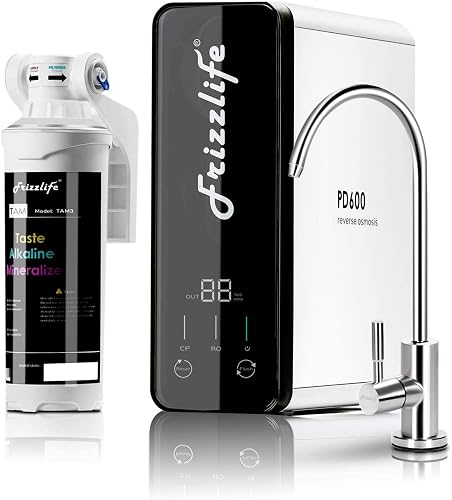
- 【Remineralization & Alkalization Under Sink Water Filter】: The water from the RO membrane is slightly acidic, which also removes natural minerals. The 3rd stage filter solves both
- 【No Tank Design Under Sink Reverse Osmosis System】: Frizzlife PD600 adopts a tankless design. A compact and sleek filter system with a small and convenient footprint takes up less
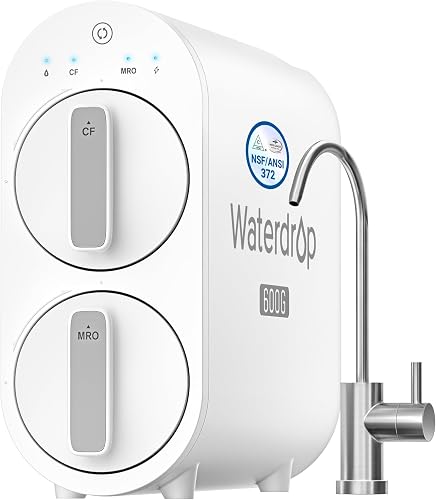
- [NSF/ANSI 372 Certified] 600 GPD & 2:1 lowdrain ratio & Tankless Design & Easy installation. Two filters are included in the package. Search "G2P600" for replacement filters
- [600 GPD fast water flow] As an upgraded reverse osmosis system, the G2P600 tankless reverse osmosis system produces 600 gallons of filtered water per day. With a fast and stable
- [Trusted certifications]: Waterdrop
- [8-stage filtration]: Tested by official third-party laboratory (SGS), the reverse osmosis system can effectively reduce TDS, chromium, PFAS, radium, fluoride, arsenic salt, iron
- Is your water safe to drink? Studies continue to pour in regarding Toxins, Hormones, Microplastics, Cancer-linked contaminants, known Carcinogens and other toxins discovered in
- Certified NSF/ANSI Standards - Tested & certified by IAPMO to meet NSF/ANSI standards 41, 53, 58, 401, and P473 for water filters, which include 84 contaminants - even
- TESTED BY SGS: Against the NSF/ANSI 58 Standard. The SimPure ROULP-3012-400-T1 has been independently tested by SGS, this ensures its exceptional quality and performance. It
- Filtered WATER NEAR 0 TDS: The water filter system utilizes exclusive technology to achieve near 0 TDS (Total Dissolved Solids), making it one of the most effective RO water
- Sanitize on every filter change. Both the G2P600 and PD600 are tankless, which reduces but does not eliminate biofilm risk. Follow the manufacturer's sanitization steps when swapping cartridges.
- Track output TDS weekly. A rising TDS on a previously stable system is the earliest signal of membrane fouling or a failed flow restrictor. Both units expose TDS through their faucet or display; record it in a notebook.
- Flush after vacations. If the kitchen sits unused for more than a few days, run the system for five to ten minutes before drawing drinking water.
With that frame, the differences between these two systems matter more than they would for an average kitchen.
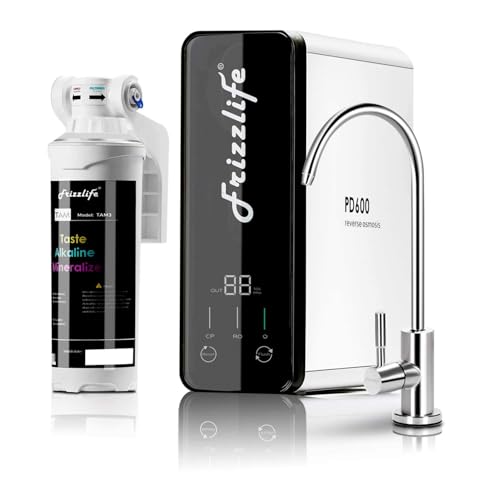
Side-by-side: Waterdrop G2P600 vs Frizzlife PD600-TAM3
| Spec | Waterdrop G2P600 | Frizzlife PD600-TAM3 |
|---|---|---|
| Daily output | 600 GPD | 600 GPD |
| Filtration stages | 7-stage tankless | 5-stage tankless with alkaline mineral post-filter |
| Pure-to-drain ratio | 2:1 | 2:1 |
| NSF/ANSI certifications | 372 (lead-free materials) | 58, 53, 42, 372 |
| Post-membrane mineralization | None (low-TDS output) | Adds calcium, magnesium, trace minerals; raises pH |
| Typical output TDS | Near zero to single digits | ~30–90 ppm after remineralization (varies by feed water) |
| Footprint under sink | Compact, tankless | Compact, tankless |
| Filter change cadence | CF: 12 mo; RO: 24 mo | PCB: 6–12 mo; RO + TAM3: 24 mo |
| Smart faucet / TDS display | Yes | Optional digital display |
| Power required | Yes (plug-in pump) | Yes (plug-in pump) |
The table makes the choice clearer: identical capacity, similar physical footprint, but very different post-membrane chemistry and certification depth.
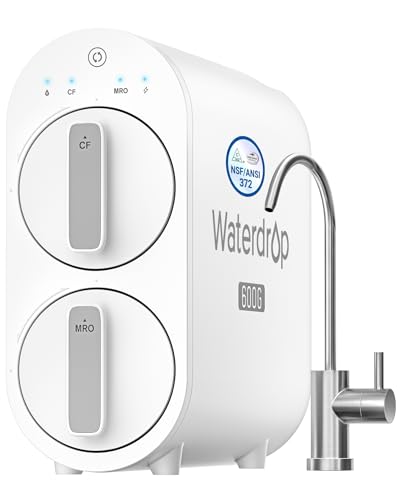
Waterdrop G2P600 — the mineral-stripped pick for strict renal diets
Waterdrop G2P600 Reverse Osmosis System
The G2P600 is Waterdrop's mid-tier 7-stage tankless unit producing 600 gallons per day at a 2:1 pure-to-drain ratio. What makes it the more conservative choice for a dialysis household is what it does not do: there is no alkaline remineralization stage. Permeate exits the membrane and passes through carbon post-polish without a calcite or magnesium-oxide cartridge adding hardness back. For a patient whose nephrologist has flagged mineral intake, that is a feature, not a deficit.
Output TDS typically drops to near zero on the meter (single digits is normal). Sodium, potassium, magnesium, and calcium all drop with the rest of the dissolved load. Fluoride rejection on a healthy membrane runs 90–95%. The integrated TDS display on the smart faucet lets a caregiver verify that the membrane is still performing — useful when a clinician asks. Install is tankless under-sink, so the 600 GPD throughput means a glass fills in under fifteen seconds without a stagnant pressure tank where bacteria can colonize between uses.
The trade-off is certification scope. The G2P600 carries NSF/ANSI 372 (lead-free materials) but lacks the 58 and 53 certifications the Frizzlife holds. The membrane is fully capable of the rejection claims — Waterdrop simply paid to certify their flagship G3P600 and X-series units more comprehensively. For many buyers that is fine; for a renal-diet household where a dietitian may ask for documentation, it is worth noting.
Waterdrop G2P600 Reverse Osmosis System
Frizzlife PD600-TAM3 — broader certifications, but remineralized output
Frizzlife PD600-TAM3 Alkaline Mineral RO
The Frizzlife PD600-TAM3 is a 600 GPD tankless system distinguished by its TAM3 post-filter, which is a remineralization cartridge that adds calcium, magnesium, and trace minerals back into the permeate and lifts pH into a mildly alkaline range. It carries NSF/ANSI 58, 53, 42, and 372 certifications — the broadest set among the systems compared here — meaning third-party labs have verified performance against the regulated contaminant classes including lead, arsenic, chromium-6, cysts, chlorine, and lead-free materials.
For a household without dialysis concerns, this is one of the strongest under-sink units in its price range — the certifications mean documented performance, and remineralized water tends to taste better and is gentler on tooth enamel than bare permeate. For a dialysis patient, the calculus changes. The TAM3 cartridge intentionally re-introduces calcium and magnesium. The added amounts are modest (typically raising TDS to 30–90 ppm) and may include trace potassium depending on the formulation. That is well below tap water in most regions, but it is more than the G2P600 produces, and any added potassium is meaningful for a CKD patient with a strict cap.
If a dialysis patient is in earlier stages (CKD 3 or moderate restriction) and the nephrologist signs off on a small remineralization load, the Frizzlife's broader certifications become a meaningful advantage. If the dietitian wants the lowest possible mineral load, the TAM3 stage cuts against that goal.
Frizzlife Reverse Osmosis Water Filter
The verdict for a dialysis patient household
If the prescribing nephrologist or renal dietitian has placed a tight cap on potassium, phosphorus, or magnesium — common in stage 4 or stage 5 CKD and in most hemodialysis patients between sessions — the Waterdrop G2P600 is the safer default. Lower output TDS, no deliberate mineral addition, and an on-faucet TDS readout that lets a caregiver document membrane health.
If the patient is in earlier kidney disease, has been told moderate mineral water is acceptable, and the household values comprehensive third-party certifications, the Frizzlife PD600-TAM3 earns its keep. The NSF/ANSI 58 and 53 certifications mean independently verified contaminant reduction, which carries weight in any conversation with a clinician.
In either case, share the spec sheet with the nephrology team before purchase, and confirm whether your municipal water has any specific contaminants (chloramines, high fluoride, elevated aluminum) that should drive the choice.
Alternatives worth a look
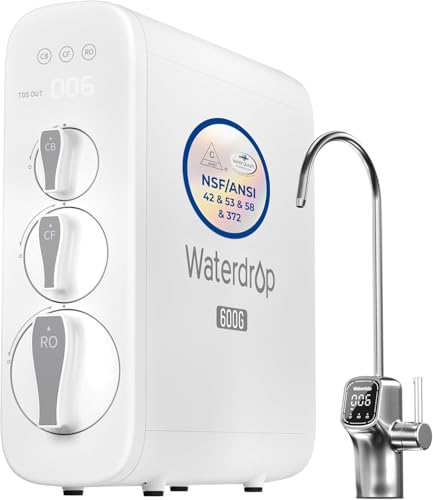
Waterdrop G3P600 — the certified upgrade path
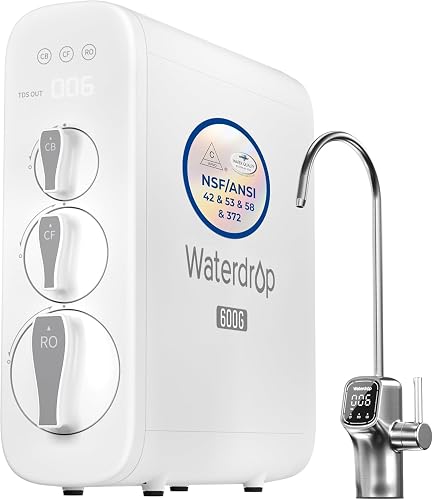
If certifications are a hard requirement and you still want the mineral-stripped output of the G2P600, the Waterdrop G3P600 is the bridge. It carries NSF/ANSI 42, 53, 58, and 372 — the same depth as the Frizzlife — without an alkaline remineralization stage on the base configuration. Eight-stage tankless, smart LED faucet with TDS display, 600 GPD, 2:1 waste ratio. For a renal household that wants documented performance plus low-TDS output, this is often the cleanest answer.
Waterdrop G3P600 Reverse Osmosis System
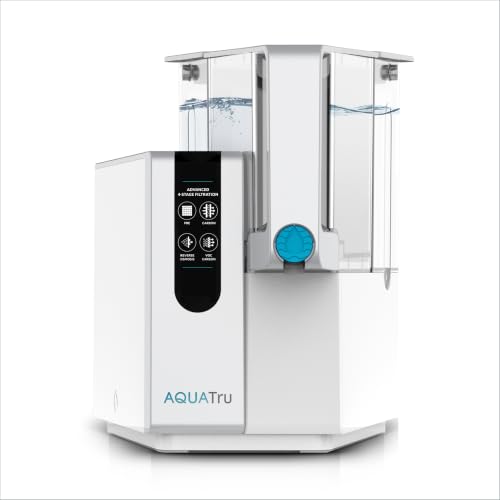
AquaTru Classic — renter-friendly, no plumbing required
If the patient lives in a rental, in a care facility, or in a household where under-sink installation isn't possible, the AquaTru Classic is a four-stage countertop RO that requires no plumbing. Independently certified against 84 contaminants including PFAS, lead, fluoride, and chromium-6. Output is bare permeate — no remineralization — making it a reasonable fit when mineral load is restricted. The trade-off is daily fill volume and the small footprint occupying counter space.
AquaTru Classic Countertop Water Purifier
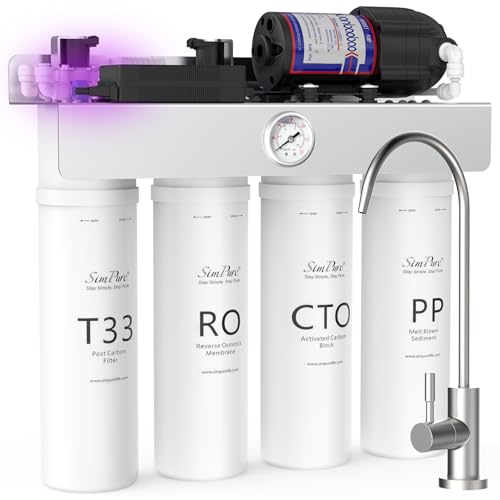
SimPure T1-400UV — when microbial integrity is the priority
Immunocompromised dialysis patients sometimes benefit from an integrated UV stage. The SimPure T1-400UV is a tankless under-sink RO with a built-in UV lamp at the dispense point and NSF/ANSI 58 certification. 400 GPD is lower than the two flagship units above, but the UV polish at the faucet adds a margin against biological contamination for households where that matters.
SimPure T1-400UV Tankless Reverse Osmosis System with UV
Installation and maintenance notes specific to dialysis households
Whichever system you choose, three operational habits matter more for a dialysis patient than they would for a typical household:
For a fuller breakdown of upkeep cadence, see our guide on maintaining a reverse osmosis system, and the related deep dive into which contaminants RO actually removes. If you are still narrowing the field, our roundup of the best under-sink RO systems for 2026 covers a broader slate, and the key features guide explains which specs to weigh against a doctor's recommendations.
Frequently Asked Questions
Is reverse osmosis water safe to drink for dialysis patients?
For drinking, generally yes — many nephrologists prefer RO water because it is low in sodium, potassium, phosphorus, and fluoride, all of which are restricted in renal diets. The key caveat: avoid systems with alkaline remineralization cartridges if your prescriber has placed strict caps on those minerals. RO drinking water is not the same as AAMI-grade water used inside a dialysis machine, which must come from a medical RO loop.
Does the Frizzlife PD600 alkaline filter add potassium that dialysis patients need to avoid?
The TAM3 cartridge primarily adds calcium and magnesium with trace minerals; published amounts of potassium added are small but not zero. For a hemodialysis patient with a strict potassium cap, that small addition can still matter cumulatively across the day, so confirm with your renal dietitian. Frizzlife also offers PD600 variants without the TAM3 stage if your dietitian wants the bare permeate.
What output TDS should a dialysis patient aim for in drinking water?
There is no single guideline number for drinking water specifically — the AAMI standards govern dialysate, not what the patient drinks. Most renal dietitians are comfortable with low-TDS RO output (under 50 ppm) because it minimizes the mineral and sodium load. The Waterdrop G2P600 typically lands in single digits; the Frizzlife PD600-TAM3 lands in the 30–90 ppm range after remineralization.
Can a home RO system replace the dialysate water used in home hemodialysis?
No. Home hemodialysis machines are supplied with a dedicated medical-grade water treatment system specified by the prescriber, built to AAMI and ISO water-quality standards for dialysis. Consumer under-sink units like the G2P600 or PD600 are for drinking, cooking, and medication water only.
How often should a dialysis household change RO filters?
Follow the manufacturer's schedule and treat it as a floor, not a ceiling. The G2P600's CF cartridge is rated for 12 months and the RO membrane for 24; the Frizzlife is similar. In an immunocompromised household, swapping a few weeks early and sanitizing per the manual at every change is a reasonable precaution. Always wash hands and wipe cartridge housings before reassembly.
Does RO water remove the chloramines that some municipalities use to disinfect tap water?
The carbon prefilters on both the Waterdrop G2P600 and Frizzlife PD600-TAM3 reduce free chlorine and chloramines to protect the membrane. Frizzlife's NSF/ANSI 42 certification specifically covers chlorine taste-and-odor reduction. If your area uses chloramines, confirm the carbon stage is sized for it and replace prefilters on schedule — a saturated carbon block lets chloramines through and accelerates membrane degradation.
Is a countertop RO unit acceptable if installing under-sink isn't possible?
Yes, with caveats. Countertop units like the AquaTru Classic produce equivalent RO-quality water without plumbing, which suits renters and care-facility residents. The trade-offs are daily output volume, counter footprint, and the need to keep the unit clean and sanitized manually. For a dialysis household, choose a countertop unit without remineralization unless the prescriber has cleared added minerals.
Key Takeaways
- Choosing the right waterdrop g2p600 vs frizzlife pd600 dialysis means matching the key features to your specific needs and budget
- Read real customer reviews and check the return policy before you commit
- Also covers: RO system for home dialysis patients
- Also covers: waterdrop g2p600 dialysis safe water
- Also covers: frizzlife pd600 medical grade water
- Compare value across models — the priciest option is not always the best fit